
The Sandwich Generation: Teenagers, Ageing Parents, and Midlife Skin
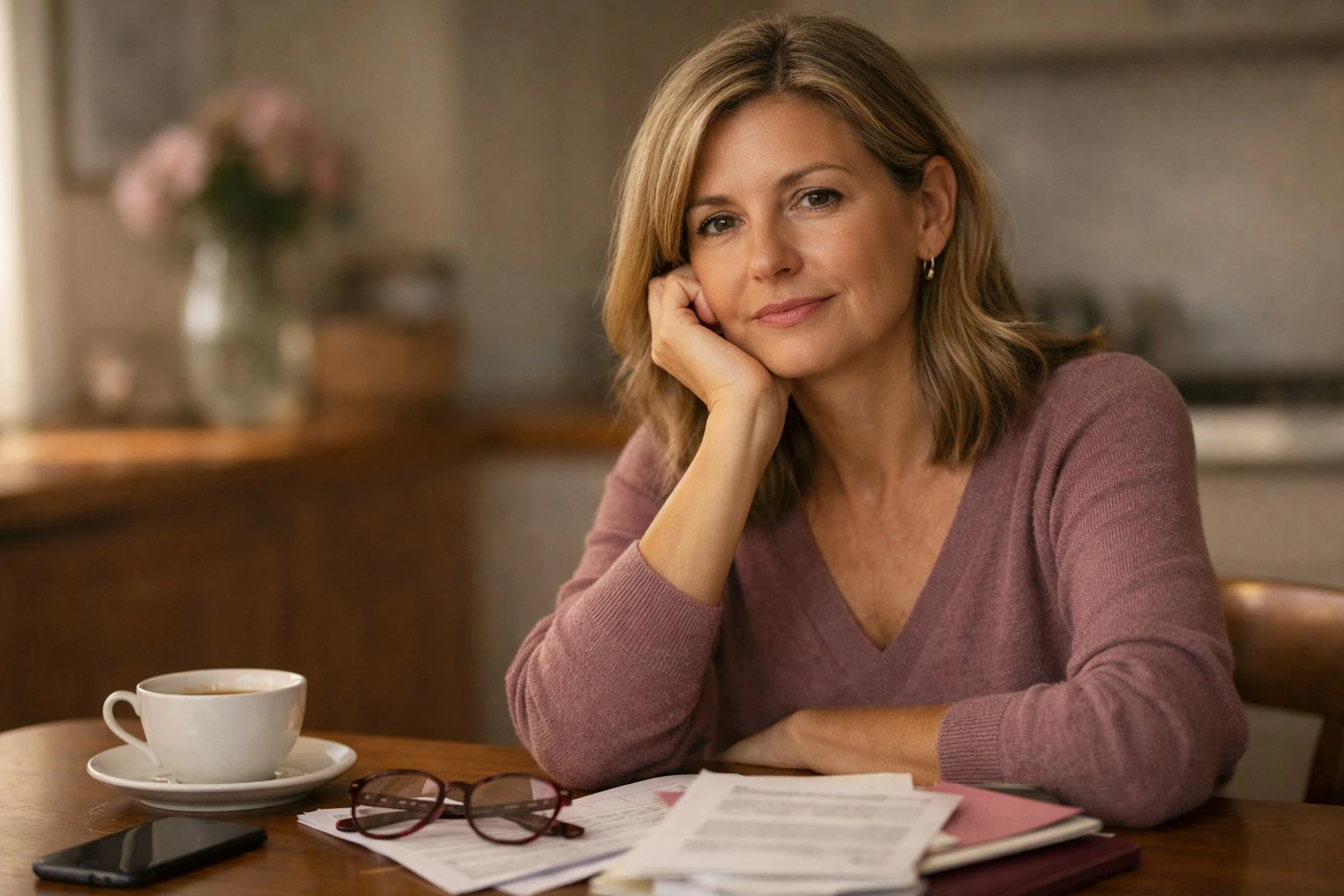
There is a particular kind of tiredness that arrives in midlife and does not respond to a nice serum, an early night, or a better attitude.
It is the tiredness of being needed in every direction at once.
Your teenager needs emotional oxygen, transport, food, perspective, money, boundaries, and someone to blame for the Wi-Fi. Your parent needs appointments, follow-up, reassurance, paperwork, shopping, and someone sensible to answer the phone. Work still expects professionalism. Life admin still multiplies. And somewhere in the middle of all that, your hormones begin shifting the goalposts.
So if you have found yourself thinking, Why am I suddenly so flat, so reactive, so dry, so tired, so unlike myself? this is your reminder that you are not weak, dramatic, or bad at coping. You may simply be standing in one of the most compressed life stages a woman can move through.
In Australia, primary carers are mainly women, and among primary carers aged 45 to 54, women account for 77%. That does not capture every school drop-off, family text thread, or 2am worry spiral, but it does confirm the bigger picture: midlife care is being disproportionately carried by women. Mayo Clinic researchers have also reported that women aged 45 to 60 who are balancing caregiving and menopause face nearly double the risk of moderate to severe menopause symptoms, with women in the “sandwich generation” especially affected.

What makes this stage so destabilising is not simply the workload. It is the overlap. Many women in this age band are moving through perimenopause or menopause at the exact same time that family demands intensify. The Australasian Menopause Society lists sleeping difficulties, dry skin, mood changes, aches and pains, and vaginal dryness among common symptoms, while dermatology guidance notes that as hormone levels fall, skin can become dry, slack and thin. Oestrogen also helps support water retention and barrier function in the skin, which helps explain why skin can suddenly feel less resilient, more reactive, and harder to “read” than it used to.
This is one reason the midlife care squeeze can feel so personal. The external story is “busy woman with a lot on”. The internal story is often, “Why is my skin breaking the rules? Why is my face tight by 3pm? Why does everything sting? Why do I look as tired as I feel?” Menopause does not just change periods. It changes skin behaviour. And when those changes are layered on top of stress and poor sleep, skin often becomes one of the first places the strain becomes visible.
Stress is not imaginary, and your skin knows it. The American Academy of Dermatology notes that feeling stressed can affect skin and hair conditions, that stress hormones such as cortisol affect the way the body works, and that stress can increase inflammation, slow wound healing, and aggravate conditions such as eczema and psoriasis. So the woman who says, “I am not even doing anything different but my skin is suddenly angry,” may actually be describing a nervous system issue as much as a skincare issue.
Then there is sleep, or the lack of it. Midlife women are often sleeping lightly, waking early, lying awake after hot flushes, or mentally sorting the next day before dawn. The National Heart, Lung, and Blood Institute states that sleep deficiency can affect emotional regulation, concentration, memory, coping, and physical health. In plain language, this means a woman can be doing her best and still feel shorter-tempered, more overwhelmed, less resilient, and far less able to keep her skin calm when sleep has been poor for weeks at a time.
So what actually helps?
Not a 12-step routine. Not a guilt spiral. Not trying to “optimise” every inch of your life while everyone else continues outsourcing their calm to you.
What often helps most in this season is simplification.
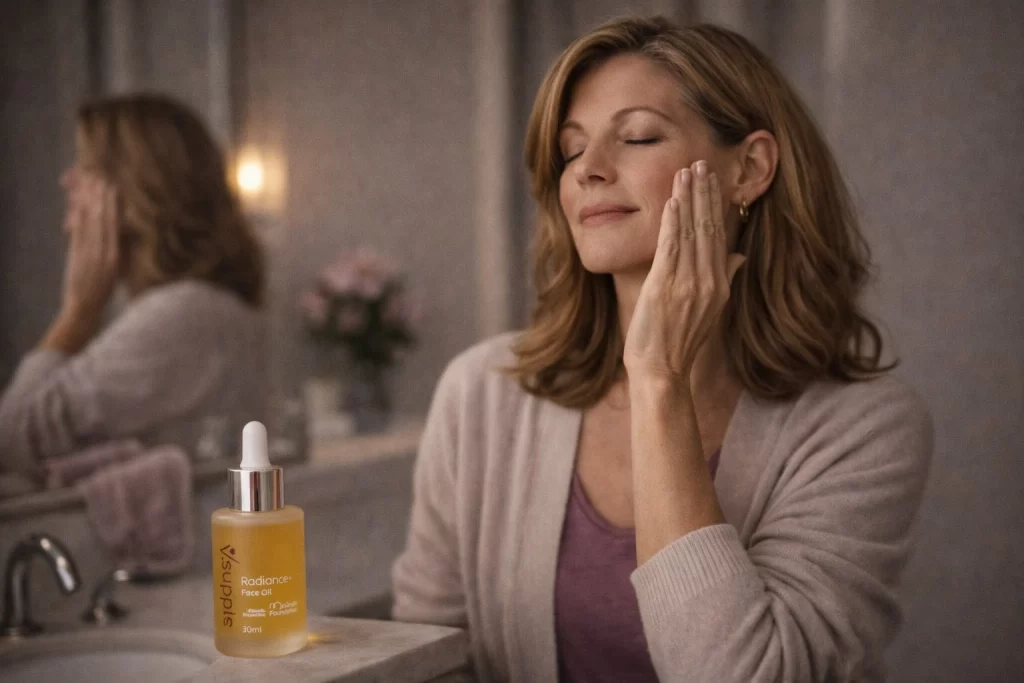
That might look like treating your skin as if it is asking for less friction, not more correction. Menopause-focused dermatology guidance recommends a mild cleanser instead of soap, regular moisturising, and fragrance-free moisturiser when skin is more easily irritated. It also notes that thinner, drier skin may not tolerate harsh or drying products well. In a high-stress season, there is a lot of wisdom in stepping back from aggressive exfoliation, over-layering actives, and punishing your face for looking exactly as tired as your life currently feels.
It might also mean changing the way you think about self-care. For women in this life stage, self-care is often sold as something extra, decorative, or indulgent. But the women I hear from are not asking for a candle and a bath. They are asking how to keep functioning when every generation around them needs something and their own body has become less forgiving.
So perhaps the more useful question is this: what restores you quickly, quietly, and without requiring another hour of effort?
Maybe it is a shower followed by a proper moisturiser and clean pyjamas before bed. Maybe it is ten minutes in the car with no one talking to you. Maybe it is saying, “I cannot organise that this week,” instead of automatically absorbing it. Maybe it is moving from vague family offers of help to named tasks, like pharmacy pickup, sports drop-off, or being the contact person for one parent appointment. None of that is glamorous, but it is real. And real support is what changes how a season feels.
There is also something powerful in dropping the idea that this phase should look graceful at all times. Teenagers are not simple. Ageing parents are not simple. Menopause is not simple. Add paid work, financial pressure, relationship strain, community obligations, and the usual domestic admin, and it becomes obvious that this is not a minor lifestyle inconvenience. It is a genuine load. No wonder so many women describe feeling as though they are “holding everything together” while also quietly coming undone.
And yet, this is where I think the conversation becomes kinder.
Because the answer is not to become superhuman. The answer is to become more honest.
Honest that this chapter can feel heavy. Honest that skin may feel more fragile when you are hormonally stretched and under-rested. Honest that some weeks are for repair, not improvement. Honest that looking tired is not a moral failure. Honest that a simplified routine, lower expectations, more specific help, and a bit more self-protection may be wiser than chasing the fantasy of coping beautifully.
If your skin is suddenly much drier, more irritated, slower to heal, or flaring in ways that are hard to settle, it is worth speaking with a GP or dermatologist, especially if sleep disruption or menopause symptoms are also escalating. Skin is not separate from life. It reflects it. And sometimes the most useful thing a woman can hear is not a tip, but permission.
Permission to stop asking why she cannot do it all without showing wear.
Permission to admit that being needed forwards and backwards at once is a lot.
Permission to understand that this is not just a personality issue, or a productivity issue, or a skincare issue. It is a life-stage issue.
And if your skin feels more tender in this chapter, perhaps that is not vanity speaking. Perhaps it is simply your body telling the truth before the rest of you has had time to say it out loud.