

The Vaginal Itch Loop: When “Thrush Treatment” Keeps Failing You
Why repeated creams, wipes and washes can make vulval itching worse, and what else might really be going on.
Introduction – when everything is labelled “thrush”
For many women, any itch in the vulval or vaginal area is automatically called thrush. The script is familiar.
You feel sore, itchy or burning.
You buy a treatment from the chemist. It settles for a while.
A few weeks or months later, it flares again.
Each time the symptoms come back faster. The creams sting more. You add wipes, washes and panty liners. Eventually you may be using something every week and wondering why your body seems to be getting harder to please, not easier.
Clinicians sometimes call this the vaginal itch loop. The symptom keeps being treated as if it is always thrush, even when something very different is going on in the skin.
This V.supple Skin Edit looks at why this loop forms, what else might be driving the itch, and where non hormonal, fragrance free care can sit inside a proper medical plan.
1. Thrush is only one reason for vulval or vaginal itch
True vaginal or vulval candidiasis is common, and for some women it is genuinely recurrent. However, itch and burning in this area can also come from:
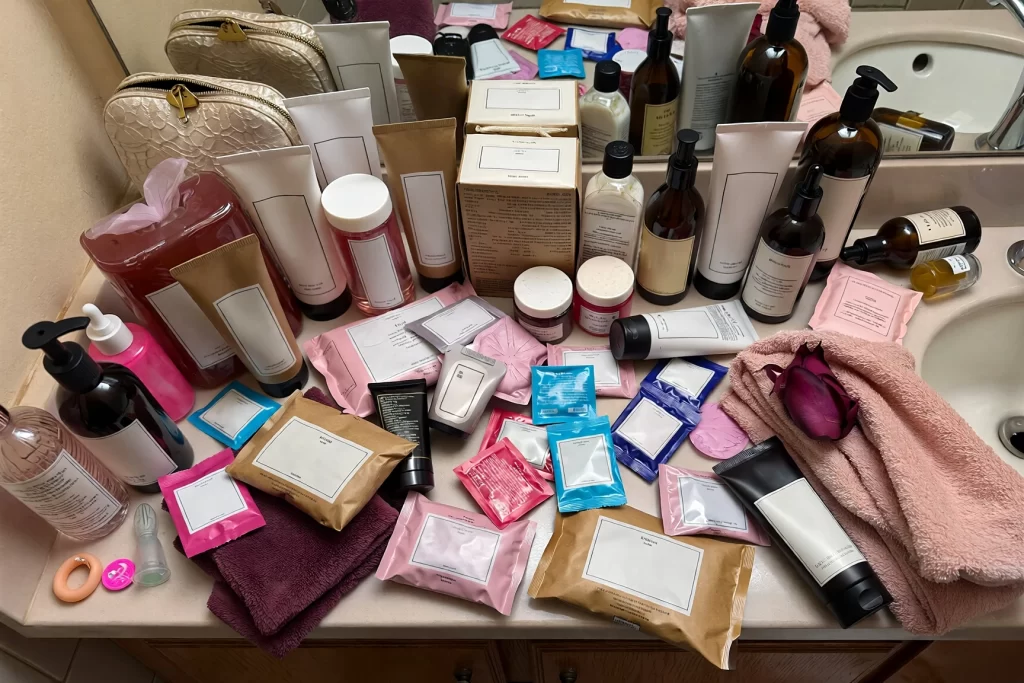
- Irritant contact dermatitis from wipes, soaps, bubble baths, detergents, deodorants, pads or liners
- Allergic contact dermatitis to preservatives, fragrances or latex
- Genitourinary syndrome of menopause (GUSM) with thin, dry, fragile tissue
- Lichen sclerosus, lichen planus or other autoimmune skin conditions
- Post radiotherapy or post surgical changes
- Simple mechanical friction in an area where the barrier is already compromised
If you keep treating every flare as thrush without swabs, examination or a proper history, you can easily miss these conditions. Worse, some of the products used repeatedly for presumed thrush can irritate already fragile tissue.
2. How the itch loop forms
The loop often follows a pattern.
- First itch
An initial true thrush infection, contact reaction or friction flare starts the symptoms. - Fast relief treatments
Over the counter antifungal creams, combination preparations with steroids, perfumed washes or wipes are added. There may be temporary relief, or a mechanical effect simply from cooling and moisture. - Barrier damage and sensitisation
Repeated use of soaps, perfumed products, topical steroids and occlusive pads weakens the skin barrier. The surface becomes thinner, drier and more reactive. Nerve endings become closer to the surface. - More itch, more products
Because the barrier is now sensitised, even mild triggers such as sweat, friction from underwear or a different detergent can provoke a flare. Each flare is labelled “thrush again”, so another course of the same products follows. - Escalation and confusion
After months or years of this, there may be chronic redness, white plaques, fissures or architectural changes that are very difficult to interpret without a specialist. Women often feel ashamed, embarrassed and exhausted by the cycle.
At this point, the itch is no longer a simple infection problem. It is a complex barrier, nerve and tissue problem.
3. Things that quietly keep fuelling the itch
Several everyday habits and products play a role in this loop.
Fragranced and “feminine” hygiene products
Vulval skin does not need fragrance. Perfumed washes, wipes, sprays and bubble baths contribute preservatives, surfactants and other chemicals that increase dryness and irritancy.
Daily liners and pads
Constant use of panty liners or pads can trap heat and moisture against the vulva, especially if the surface is plasticised or fragranced. For someone with GUSM or dermatitis, this is a perfect environment for friction and maceration.
Over washing and scrubbing
Washing more often, using hotter water or rough cloths to try to “feel cleaner” strips lipids and natural moisturising factors. The tissue then feels tight, dry and even more itchy.
Tight or synthetic fabrics
Close fitting synthetic underwear and tight trousers increase friction and warmth, particularly along seams and gussets. Micro tears are more likely when the epithelium is thinned by low oestrogen or previous inflammation.
Repeated topical steroids without review
Topical corticosteroids can be very helpful when prescribed correctly and monitored. Long term unsupervised use, especially of potent products in thin skin, can contribute to further barrier thinning. This needs careful specialist input rather than self directed repeats.
4. Conditions that are often mistaken for “just thrush”
A proper examination and history can uncover different diagnoses that need specific care.
Genitourinary syndrome of menopause (GUSM)
Low oestrogen leads to thinner, drier vulval and vaginal tissue with loss of elasticity and changes in pH. Symptoms include burning, itching, tearing with intercourse, and recurrent bacterial overgrowth conditions. Treating GUSM with antifungal creams does not restore the underlying tissue.
Lichen sclerosus
This autoimmune skin condition affects the vulva. Skin can look white, thin and shiny, and may tear easily. It can cause severe itch and architectural changes. It requires medical diagnosis, often a biopsy, and specific long term treatment.
Contact dermatitis
Redness, swelling, scaling and itch confined to areas in contact with specific products or fabrics. Removing the trigger is crucial. Ongoing exposure while using antifungals will not resolve the problem.
Chronic vulvovaginal candidiasis
Some women do have genuine recurrent thrush, particularly with antibiotic use, diabetes or immunosuppression. They need laboratory guided diagnosis and structured treatment, not random repeat courses.
Other dermatoses
Psoriasis and other dermatological conditions can also involve the vulval area.
If symptoms are recurrent, severe, or associated with skin changes such as whitening, cracking or new lumps, it is vital to see a clinician with interest in vulval disease rather than continuing to self treat.
5. Breaking the loop – a practical, stepwise plan
Step 1: Stop guessing, seek assessment
Book an appointment with a GP, gynaecologist, dermatologist or sexual health physician who is comfortable examining the vulva.
- Be prepared to describe your symptoms, triggers and product history honestly.
- Ask whether swabs or a biopsy are appropriate.
- Request a clear explanation of the working diagnosis, not just another script.
Step 2: Strip back irritants
In the meantime, you can almost always simplify external care.
- Use only lukewarm water on the vulval area.
- Avoid wipes, deodorants, powders, bubble baths and fragranced laundry detergents for underwear.
- Choose breathable, soft, cotton rich underwear and avoid tight seams for a while.
- Limit liners and pads where possible, and opt for fragrance free, cotton topped products when required.
Step 3: Support the barrier with non hormonal, fragrance free care
Once irritants are reduced, many women benefit from a carefully chosen, non hormonal vulval moisturiser or balm that focuses on hydration and barrier repair rather than fragrance and foam.
Key formulation features to look for:
- Microsphere hyaluronic acid that creates tiny reservoirs of water in the superficial tissue for sustained hydration and improved elasticity.
- Physiological lipids and emollients such as triglycerides and plant oils that soften and help restore the barrier.
- Free from common irritants including added fragrance, harsh surfactants, known sensitising preservatives and dyes.
Applied once or twice daily, especially after gentle washing and before known friction exposures, this type of product can help the tissue tolerate everyday contact better. For some women, an internal preparation such as a non hormonal hyaluronic acid pessary may also be part of their care, prescribed and supervised by a doctor.
Step 4: Agree a follow up plan
The itch loop is rarely broken in a single appointment. Ensure there is a plan for review.
- What will be checked at the next visit.
- How long new treatments should be tried before assessing efficacy.
- When to escalate to a vulval specialist if the diagnosis remains unclear.
6. Red flags that need urgent review
While many itch loops are driven by benign but distressing conditions, some features need prompt medical attention.
Seek urgent review if you notice:
- New bleeding from the vulva or vagina that is not menstrual
- Persistent ulcer, lump or area that will not heal
- Rapidly changing pigmented lesion in the vulval area
- Severe pain with minimal visible change
In these situations, do not rely on self care or repeat over the counter products. Proper diagnosis is critical.

7. Moving from shame to science
Vulval itching is often wrapped in embarrassment. Many women apologise for “making a fuss” or feel guilty that they have used so many products without telling anyone.
The reality is that your skin and mucosa have been giving you data all along. The itch loop is a sign that the tissue is not coping and that the approach so far has not matched the underlying problem.
Breaking that loop involves:
- Moving from self diagnosis to proper assessment
- Removing irritants rather than adding more fragrance and foam
- Supporting the barrier with non hormonal, science led care
- Following up until you have a clear diagnosis and plan
V.supple has been developed in a medical context to sit alongside clinical care as a non hormonal option for hydration and barrier comfort in sensitive and intimate skin. Any change to your regimen should be discussed with your clinician, particularly if you have active dermatoses, are under oncology care or are using prescribed topical treatments.
You deserve more than an endless cycle of “try another cream and hope for the best”. You deserve clear information, a considered plan and tissue that is as comfortable as your clinicians can help it to be.