
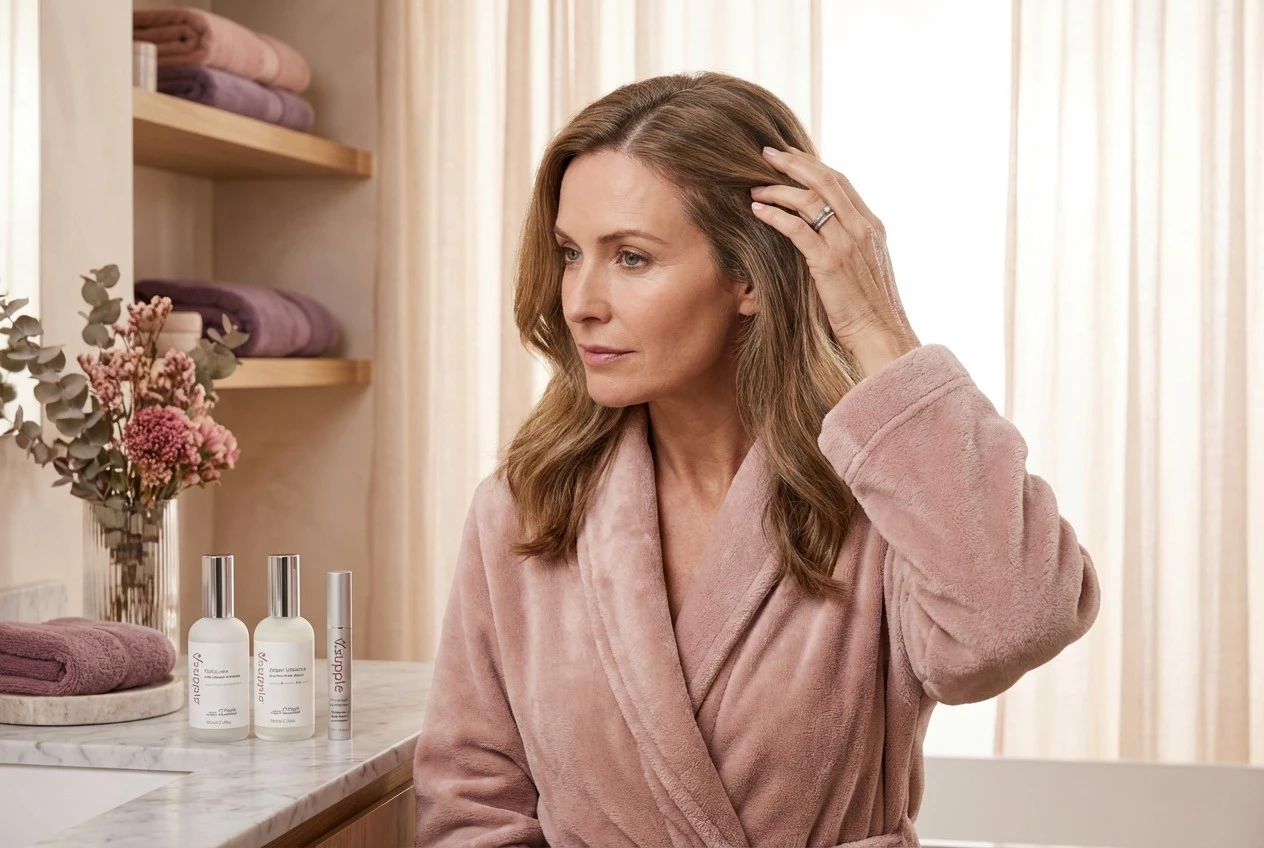
Hair Is Skin: The Perimenopause Hair, Scalp, Lash and Brow Story
We spend a lot of time talking about menopause skin.
The dryness. The flushing. The irritation. The sudden feeling that products you used for years no longer seem to land the same way.
But for many women, the hair story starts changing at the same time.
Not only the hair on your head, either. The scalp can feel tighter, itchier and more reactive. The part line can look wider. The crown can look flatter. Your ponytail feels a bit less full. Brows can lose density. Lashes can feel shorter, drier or more fragile. Sometimes the shift is subtle and slow. Sometimes it feels like it happens all at once. Either way, it can be surprisingly emotional.
The most useful way to think about this is simple.
Hair and scalp health are part of skincare.
Because the scalp is skin. The follicle lives in skin. Barrier function matters. Inflammation matters. Dryness matters. Hormonal shifts matter. Once you start looking at it through that lens, a lot of midlife hair confusion starts to make more sense.
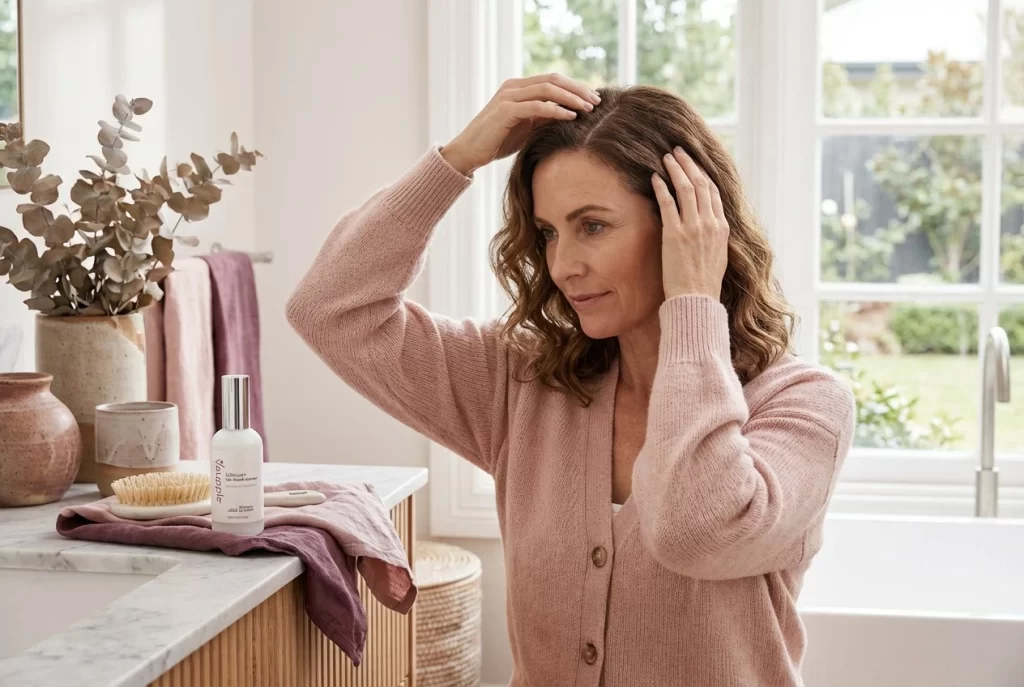
Why this becomes a bigger story in perimenopause
Perimenopause can begin years before your final period, and for many women it brings a whole collection of changes that do not always get enough airtime. Skin can become drier. Sleep can become patchier. Flushing may appear out of nowhere. And hair can stop behaving the way it used to.
That can show up as more shedding in the shower, less density through the crown, finer strands around the hairline, or a scalp that suddenly feels irritated by products you have used for years. Some women notice it most in their brows. Others notice it in lashes. Others feel the main change is not actual loss but texture, dullness, brittleness or a general sense that their hair has become more fragile.
This is one reason the conversation matters so much. Midlife hair change is not always one obvious symptom. It is often a combination of comfort, density, texture and confidence.
Hormones are part of that story, but they are not the whole story. Genetics matter. Stress matters. Illness matters. Deficiency can matter. So can inflammatory scalp conditions, autoimmune issues and medication changes. That is why it helps to pay attention to pattern instead of panicking at every strand on the bathroom floor.
The scalp deserves skincare-level attention
A lot of women respond to midlife hair change by throwing more “hair products” at it.
Stronger shampoos. More dry shampoo. More texture spray. More heat styling. More scrubbing. More perfume. More attempts to out-style what is really a comfort and resilience problem.
But if the scalp is suddenly dry, itchy or reactive, the answer is often not more force. It is more respect.
Treat the scalp less like fabric and more like face skin.
That means gentler cleansing. Less friction. Less aggressive brushing. Less instinct to pile on fragranced styling products when the barrier is already feeling unsettled. It also means paying attention when the scalp itself is talking back. Persistent itch, redness, tenderness, flaking or burning are not just annoying side notes. They are signs that the skin environment may be struggling.
This is where the phrase hair is skin really earns its place. If the scalp is uncomfortable, the rest of your hair routine often starts to unravel as well.
Not all thinning is the same
This is one of the most helpful mindset shifts in midlife beauty.
“Hair loss” is not one single thing.
Some women notice a gradual widening of the part line. Some get a more diffuse drop in density. Some see a temporary period of increased shedding after illness, stress or a major life event. Some notice lashes and brows becoming sparser alongside scalp changes. Some feel their scalp is the bigger issue, not the hair itself.
That is why better questions are often more helpful than bigger reactions.
Is it sudden or gradual?
Is the scalp comfortable or irritated?
Is it concentrated at the crown, temples or part line?
Are lashes and brows changing too?
Has anything else shifted recently, such as health, medication, stress or cycle changes?
That kind of pattern recognition is much more useful than assuming every change is “just hormones” or every bad hair week means disaster.
Lashes and brows count too
Lashes and brows are often the most emotionally charged part of this conversation.
They frame the face. They shape expression. They affect whether you feel like you look rested, polished or just a little less like yourself. And yes, those changes matter.
Brows can lose fullness. Lashes can feel drier or more brittle. Some women notice they do not seem to grow as long as they once did. Others notice gaps after years of over-plucking, cosmetic treatments or simple wear and tear from makeup removal and rubbing.
In midlife, this can be part of the wider hormonal and skin story, but it is also a reminder to go gently. The more delicate the hair, the less it tends to like rough handling, aggressive removal, or constant cycling through treatments that promise instant drama but leave the fibres feeling weaker over time.
A V.supple® routine that fits this story
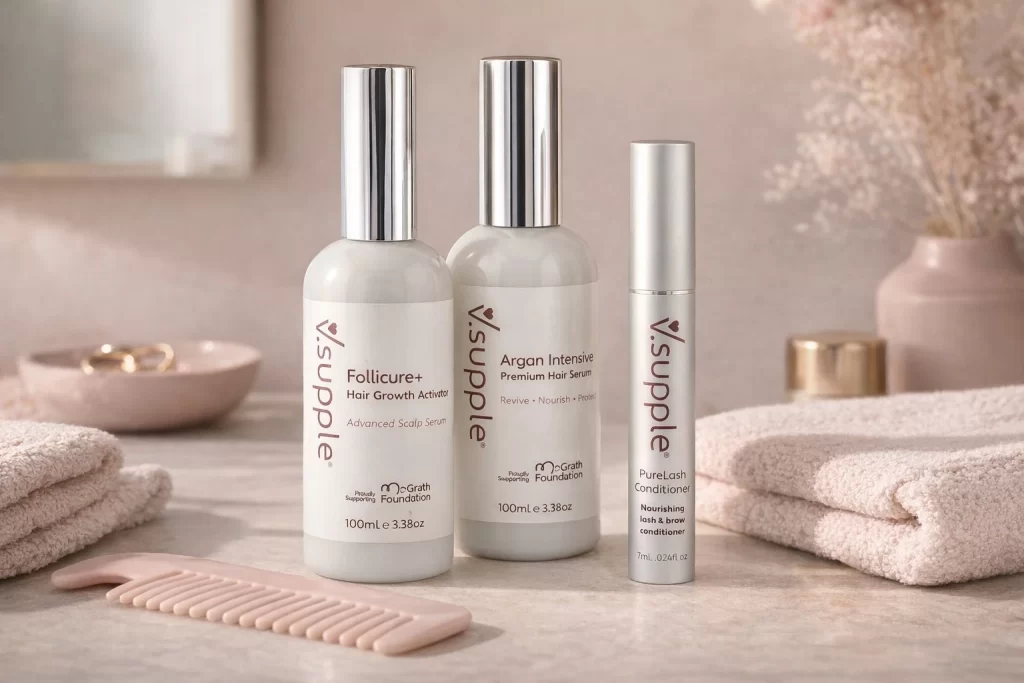
In the V.supple® range, the most natural fit for this topic is a simple three-part routine that respects the fact that the scalp, the hair fibre, and delicate face-framing hairs are not all asking for the same thing.
For the scalp, V.supple® Follicure+ fits the root-level side of the conversation. It is a leave-in treatment designed to support scalp comfort, density and follicle health, which makes it a logical step when the issue feels bigger than styling alone. If your part line seems wider or your scalp feels like it needs more thoughtful support, this is the kind of product that belongs in the routine rather than only in the panic phase.
For the mid-lengths and ends, V.supple® Argan Intensive makes the most sense where dryness, dullness, frizz or heat stress are part of the story. Midlife hair often needs less roughness and more protection. A lightweight serum through the lengths can help hair look smoother, shinier and more finished without making the scalp itself feel overloaded.
For lashes and brows, V.supple® PureLash Conditioner sits neatly in the delicate-hair category. When lashes or brows feel brittle, sparse or simply not as glossy and healthy as they once did, a conditioning step can help them feel softer, more nourished and easier to manage without pushing the routine into anything overcomplicated.
That combination works because it respects the biology of the situation. Scalp support at the root. Protection and softness through the lengths. Gentle conditioning for lashes and brows.
A brief word on pubic hair
Yes, this wider hair story can extend beyond the scalp.
Some women also notice changes in body hair and pubic hair density or texture as hormones shift. It is not always something people talk about openly, but it belongs in the broader picture of how skin, hair and comfort change through perimenopause and menopause.
That said, this part of the story deserves its own fuller conversation alongside intimate skin, dryness, comfort and AV. For this article, it is enough to acknowledge that the midlife hair story is not always limited to the scalp, brows and lashes.
The habits that help most
Midlife hair rarely loves panic.
The basics still matter, perhaps more than ever. Reduce unnecessary heat where you can. Be gentler when brushing or towel drying. Avoid tight styles if your hair already feels more fragile. Be mindful with fragranced products if your scalp is becoming reactive. Give routines enough time to work before chopping and changing every week.
It also helps to separate what the scalp needs from what the lengths need. A sensitive scalp does not automatically need heavier styling. Dry ends do not automatically need more shampoo. Brows and lashes do not usually benefit from rougher cleansing or more rubbing. The more precise the routine, the less chaotic it feels.
And there is something emotionally useful in that too. A calm, consistent routine can restore a sense of steadiness when your hair suddenly feels less predictable than it used to.
When not to just “wait it out”
Some change is common. Not every change is harmless.
If your shedding is rapid, patchy or inflamed, if your scalp is painful or very itchy, or if your brow or lash loss is sudden and obvious, it is worth getting it checked properly. Midlife is a common time for hormonal change, but it is also a time when other issues can overlap, and they are not always obvious without a closer look.
It is easy to dismiss everything as “just menopause”. It is also easy to spiral and assume the worst. The better middle ground is simple: notice the pattern, support the skin, and seek proper advice when the change feels unusual, fast or uncomfortable.
Hair can feel deeply personal because it is not just about appearance. It is identity. It is softness. It is routine. It is self-recognition.
So if your scalp feels more sensitive, your hair feels less dense, and your lashes or brows feel less like they used to, you are not imagining it. This is part of the skin story too.
And like so much of perimenopause care, the best response is usually not panic.
It is gentleness. Consistency. Thoughtful support. And the reassurance that change does not always mean something is going wrong. Sometimes it means your body is asking for a different kind of care than it needed before.