
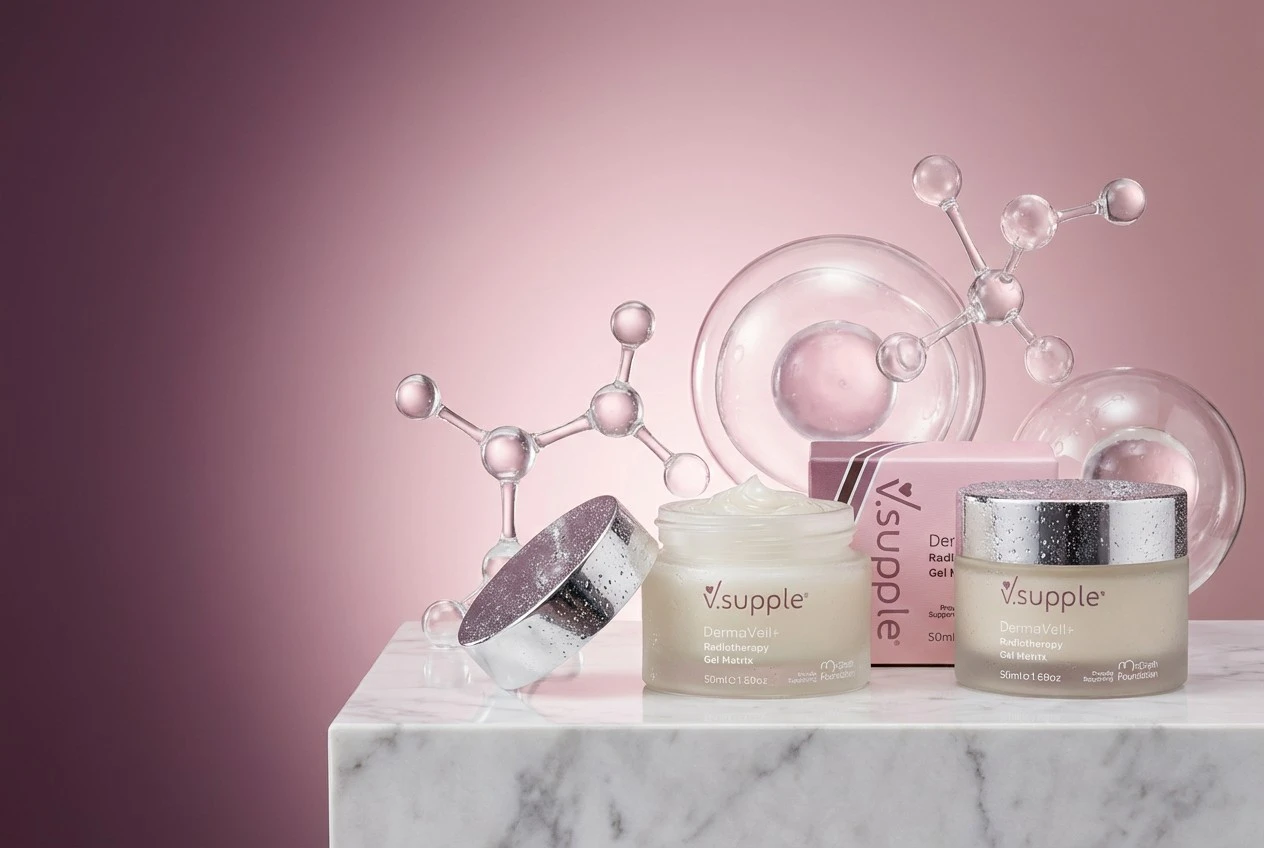
V.supple® DermaVeil+: The Hyaluronic Acid Deep Dive
When we introduced V.supple® DermaVeil+ earlier this week, we called it a hero product. Today’s edit is the closer look.
Because what makes DermaVeil+ feel so modern is not simply that it contains hyaluronic acid. It is that it uses a layered hyaluronic acid story, with different forms chosen for different roles, so the formula behaves like a complete hydration system rather than a one-note gel. That sits neatly with the DermaVeil+ flyer, which positions the product as a next-generation recovery gel matrix designed to hydrate, calm and protect sensitive or post-treatment skin, with 11x hyaluronic acids, a ceramide-lipid blend, calendula, bisabolol, Kakadu Plum and Prickly Pear seed oils.
There is a reason this kind of hydration-first skincare feels so current. South Korea remains one of the most influential beauty markets in the world, with cosmetics exports reaching a record AU$16.0 billion in 2025, including AU$12.0 billion in skincare products. That does not just tell us K-beauty is popular. It shows how strongly the global market is responding to elegant, texture-focused, hydration-led formulation.
DermaVeil+ belongs in that conversation. Not because it copies trends, but because it reflects a smarter way of thinking about skin comfort: less brute force, more intelligent layering, and more respect for the skin barrier.
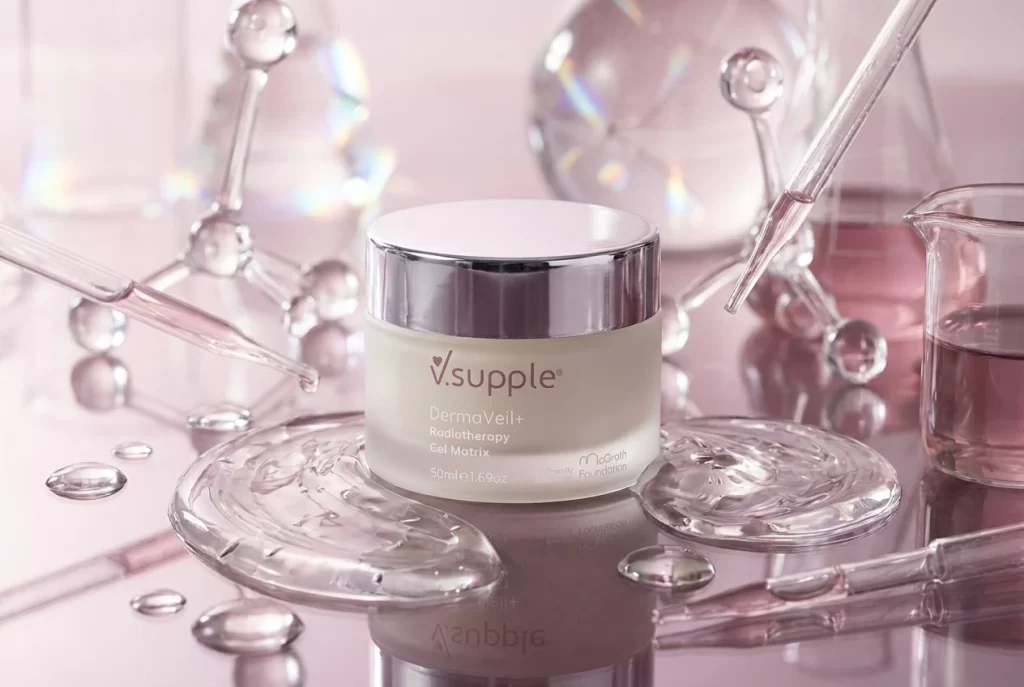
Why one hyaluronic acid is never the whole story
People often talk about hyaluronic acid as if it is one single ingredient doing one single job. In reality, the size and structure of the molecule matter.
A 2025 review on topical hyaluronic acid summed this up neatly: high molecular weight forms tend to sit closer to the surface and support a film-like hydration effect, while smaller molecular weight forms behave differently and can move further into the upper layers of the skin. The same review concluded that HA below 100 kDa can penetrate skin, which is one reason formulators increasingly use blends rather than relying on a single form.
That is the easiest way to understand DermaVeil+. It is not asking one version of hyaluronic acid to do everything. It is using a team.
And that approach is not just theoretical. A 2024 clinical evaluation of multi-weight topical HA formulations reported improvements in moisturisation within 30 minutes, with visible improvements in dryness, roughness and fine lines appearing as early as two weeks.
The multi-form hyaluronic acid complex, explained simply
Here is the plain-English version of what is going on inside the formula.
Hyaluronic acid, sodium hyaluronate and potassium hyaluronate
These are the classic water-binding forms most people think of when they hear hyaluronic acid. In cosmetic ingredient references, sodium hyaluronate is classed as both a humectant and a skin-conditioning ingredient, which makes sense because its core job is helping skin hold onto moisture and stay comfortable.
In real life, these are the forms that help explain why skin can feel less tight, less papery and more cushioned after use.
Sodium hyaluronate crosspolymer
This is where the formula starts to feel more sophisticated.
A crosspolymer is a crosslinked version of hyaluronic acid. Cosmetic ingredient references classify sodium hyaluronate crosspolymer as a humectant and skin-conditioning ingredient, while the 2025 review describes crosslinked HA as forming a more cohesive film at the skin surface and being associated with better epidermal water content and lower transepidermal water loss than some non-modified forms.
In simple terms, this is the hydration mesh. It helps give the formula that more lasting, cushioned feel rather than a quick wet feeling that disappears.
Sodium acetylated hyaluronate
This is one of the more interesting modified forms of HA.
The 2025 review describes acetylated HA as a common cosmetic derivative and says acetylation improves the skin bioavailability of HA. In the same review, a 15 kDa sodium acetylated hyaluronate was reported to permeate human skin explants more effectively than its non-modified equivalent. Cosmetic ingredient references also classify sodium acetylated hyaluronate as a humectant.
In everyday language, this helps explain why some modern HA blends feel more flexible, clingy and long-wearing on the skin rather than simply watery.
Hydroxypropyltrimonium hyaluronate
This sounds intimidating, but the simple version is easy.
Cosmetic ingredient references classify hydroxypropyltrimonium hyaluronate as a film-forming ingredient, meaning it helps create a continuous film on the skin.
That is useful in a formula like DermaVeil+ because film-forming support can help with that “soft veil” effect people notice when a product feels comforting but not heavy.
Hydrolysed hyaluronic acid and hydrolysed sodium hyaluronate
When you see the word hydrolysed, it means the material has been broken into smaller pieces. Cosmetic ingredient references describe hydrolysed sodium hyaluronate as a skin-conditioning ingredient, and the broader HA literature points to lower molecular weight forms as behaving differently from larger surface-level forms.
These smaller forms are part of what makes multi-form HA systems feel more nuanced. They help round out the formula so it is not all surface slip and no substance.
The microsphere side of the story
The second part of the DermaVeil+ hydration architecture is just as interesting.
Public technical material for the microsphere HA technology used in this space describes an oil-dispersed sodium hyaluronate system in which different molecular weights of HA are dispersed in the oil phase in the form of microspheres. The same material explains the three-part logic clearly: large molecular HA forms a protective hydration film at the surface, medium molecular HA softens by binding water, and small molecular HA helps capture water within the skin.
Why does that matter? Because hyaluronic acid is naturally a water-loving material. Creating a microsphere format is a clever way to expand how it can behave inside more complex cosmetic textures.
That does not mean every finished product performs exactly the same way as an ingredient brochure. But it does show why this kind of technology is attracting attention. It is not just about adding HA to a formula. It is about how that HA is structured and delivered.
Why this matters in DermaVeil+
This is where the product story comes together.
DermaVeil+ is not built around a single flashy ingredient claim. It combines a multi-layered hyaluronic acid complex, a ceramide-lipid barrier blend, and calming ingredients like calendula and bisabolol, all within a fragrance-free, non-hormonal recovery gel matrix for sensitive or post-treatment skin.
That is why it makes more sense to talk about DermaVeil+ as a hydration architecture rather than just an HA gel.
Some parts of the formula are there for immediate comfort. Some help hold onto moisture. Some help create a more breathable, protective feel. Some help the formula feel more elegant and complete. That is what makes the texture feel thoughtful rather than basic.
Where hyaluronic acid technology is heading next
The most exciting part of the HA story is that it is still evolving.
Recent reviews describe the category moving into more advanced delivery systems, including hydrogels, nanoencapsulation, liposomes and microneedle-based platforms, all aimed at improving retention, delivery precision and overall performance.
For the everyday skincare user, the takeaway is simple: the future of hyaluronic acid is not just more of it. It is better designed hyaluronic acid.
Better size control. Better delivery. Better staying power. Better pairing with barrier-supportive ingredients.
And that is exactly why DermaVeil+ feels timely.
The bottom line
What makes DermaVeil+ compelling is not one miracle molecule.
It is the way the formula thinks.
It uses the familiarity of hyaluronic acid, then builds on it with different sizes, different structures and different hydration behaviours in one product. That is why the texture feels more layered. That is why the comfort feels more intentional. And that is why DermaVeil+ earns its place as a hero product in the range.
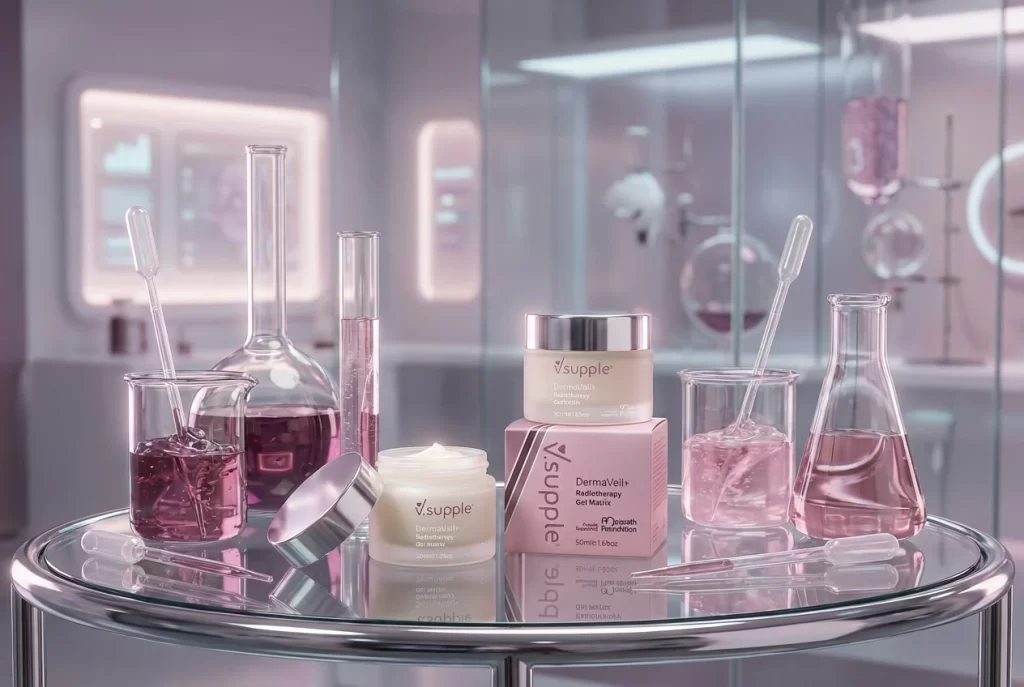
Once you understand the hyaluronic acid story inside it, DermaVeil+ stops sounding like a standard skincare launch and starts making a lot more sense.