 Part proceeds to McGrath Foundation


The Skin Edit: When Skin Becomes More Reactive in Midlife
Skin Edit focus
Understanding why skin tolerance often changes with age — and how to support calmer, more resilient skin without doing too much.
When skin that once coped suddenly doesn’t
Many women notice a shift in their skin during midlife.
Products that were once tolerated may sting. Friction feels more noticeable. Skin reacts faster and recovers more slowly. This can affect the face, body, and vulval skin alike, even if nothing obvious has changed.
This isn’t about fragility. It’s about changing thresholds.
Why skin reactivity often increases with age
Skin resilience is influenced by several overlapping factors that evolve over time.
Barrier function changes
With age and hormonal change, the skin barrier can become thinner and less efficient at retaining moisture. This makes skin more vulnerable to irritation from friction, cleansing, and environmental exposure.
Slower recovery
Skin still responds, but it may take longer to settle after being challenged. What once passed unnoticed can now linger as irritation or sensitivity.
Cumulative exposure
Years of sun, stress, products, and treatments add up. Even without visible damage, skin may become less forgiving.
For women with a history of cancer treatment, these effects can be more pronounced and deserve particular care.
Why doing more often makes things worse
When skin becomes reactive, the instinct is often to add more:
- more cleansing
- more products
- more switching
Unfortunately, this can overwhelm skin that is already working harder to maintain balance.
Calmer skin is usually supported by less intervention, not more.
A steadier way to support skin comfort
Across all skin areas, including intimate skin, the same principles tend to help.
Keep routines predictable
Consistency allows skin to settle. Constant change keeps it on alert.
Reduce friction where possible
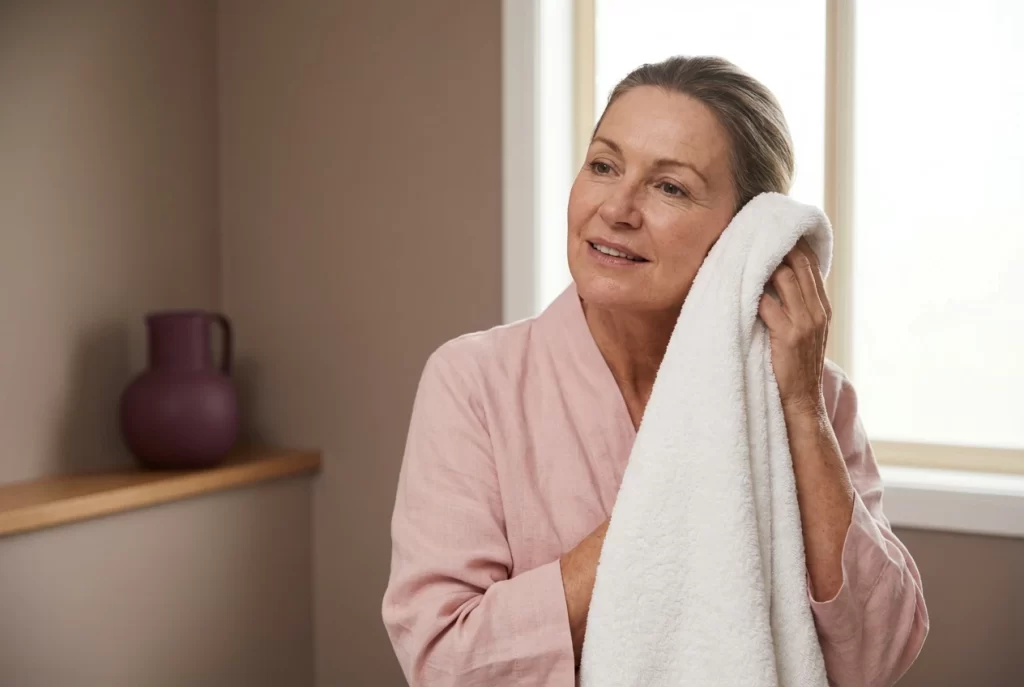
Tight clothing, repeated wiping, harsh towels, and over-cleansing all add unnecessary stress.
Prioritise barrier support
Moisture retention and comfort matter more than actives or results-driven routines at this stage.
Respect recovery time
If skin feels unsettled, give it space to calm before introducing anything new.
When sensitivity overlaps with AV
For women experiencing atrophic vaginitis, increased skin reactivity can be particularly noticeable. Thinner, drier tissue may respond more quickly to friction, products, or routine changes, even those that were previously well tolerated.
This overlap does not mean symptoms are worsening or progressing rapidly. It reflects how interconnected skin health can be across the body, particularly when tissue is more fragile and less resilient than it once was.
In this context, simpler routines are often better tolerated. Using a single, well-formulated product designed to calm, hydrate, and support the skin barrier can be easier for sensitive tissue than rotating multiple products. For some women, an external moisturising option such as V.supple® Balm can form part of a consistent, gentle routine focused on comfort rather than correction.
Gentle, predictable care, combined with clear diagnosis, helps reduce unnecessary irritation from misdirected or excessive treatments.
A closing thought
Skin in midlife asks for a different kind of attention.
Not urgency.
Not correction.
Not intensity.
Just steadiness, respect, and an understanding that resilience looks different now than it once did.
Listening to those changes, rather than fighting them, is often what allows skin to feel calmer again.