

Ovarian Cancer Awareness Month, Knowing the Signs and Seeking Clarity
Skin Edit focus
A practical, educational guide to ovarian cancer awareness in Australia: what ovarian cancer is, why early detection is challenging, the symptoms to know, and what to do if something feels persistent or unusual.
February is Ovarian Cancer Awareness Month in Australia
February is recognised nationally as Ovarian Cancer Awareness Month. You may see teal ribbons and teal themed messaging across Australia, designed to encourage earlier conversations, earlier review of persistent symptoms, and better outcomes over time.
Awareness does not mean worry. It means paying attention to what is new, persistent, or out of character for you.
Ovarian cancer in Australia, the latest key numbers
Ovarian cancer is less common than some other cancers, but it has a high impact because it is often diagnosed at a later stage.
- Estimated new cases (2025): 1,929
- Estimated deaths (2025): 1,061
- Five year relative survival (2017 to 2021): 49%
- Lifetime risk to age 85 (estimated for 2025): 1 in 83
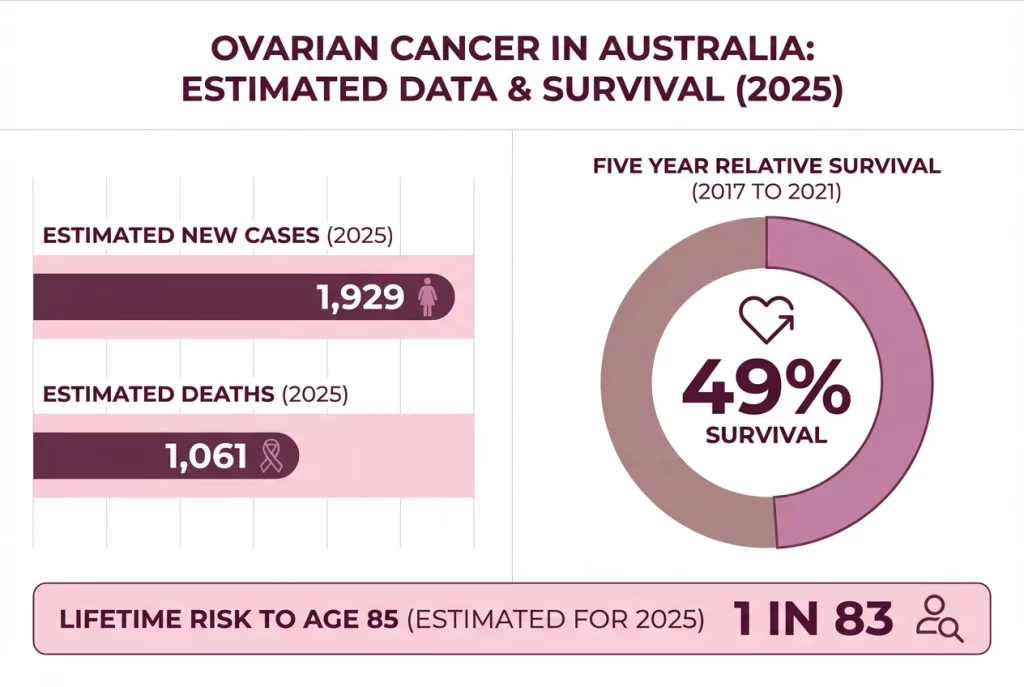
These statistics are not here to alarm. They help explain why ovarian cancer awareness matters, and why persistent symptoms deserve timely review.
Why early detection can be difficult
Ovarian cancer can be difficult to detect early because the initial symptoms can look like common digestive, urinary, or hormonal changes. Many women describe a sense that something is “not quite right” rather than a single dramatic symptom.
Importantly, there is currently no routine screening test proven to reduce deaths from ovarian cancer in women who do not have symptoms. Tests such as CA 125 blood test and ultrasound can be useful as part of an assessment when symptoms are present, but they are not recommended as general screening tests for women without symptoms.
Symptoms to know
The most commonly reported symptoms linked with ovarian cancer include:
- persistent abdominal bloating or increased abdominal size
- abdominal or pelvic pain
- loss of appetite, feeling full quickly, or indigestion
- needing to urinate more often or urgently
- changes in bowel habits, such as constipation or diarrhoea
- unexplained fatigue
- unexplained weight loss or weight gain
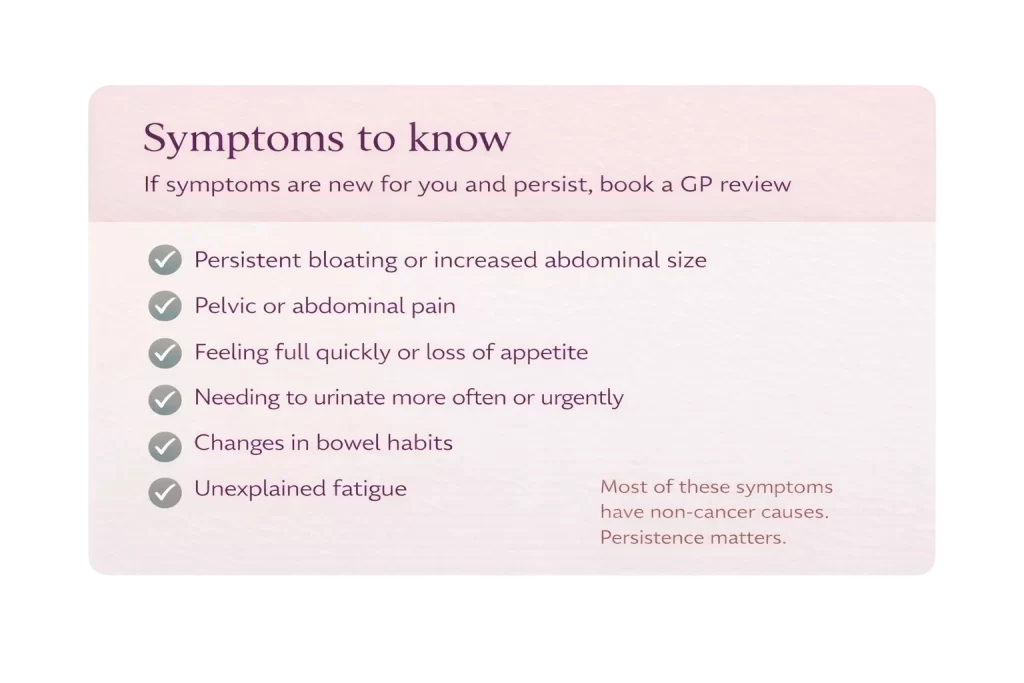
These symptoms are common and are far more often caused by non-cancer conditions. What matters most is persistence and change.
A helpful guide is to book a check up if a symptom is new for you, occurs on most days for around four weeks, or is clearly worsening, even if it feels mild.
A simple symptom checklist that can help at your appointment
If you are booking a review, it can help to note:
- what the symptom is and when it started
- how often it occurs (daily, most days, weekly)
- whether it is getting worse, staying the same, or fluctuating
- any associated changes (bowel habits, appetite, urinary frequency, fatigue)
- anything that clearly improves or triggers it
This does not replace medical advice. It simply makes the conversation clearer and more specific.
What a GP may do next
If symptoms warrant investigation, your GP will take a careful history and may examine your abdomen. Depending on your symptoms and individual context, they may arrange tests such as a CA 125 blood test and an ultrasound.
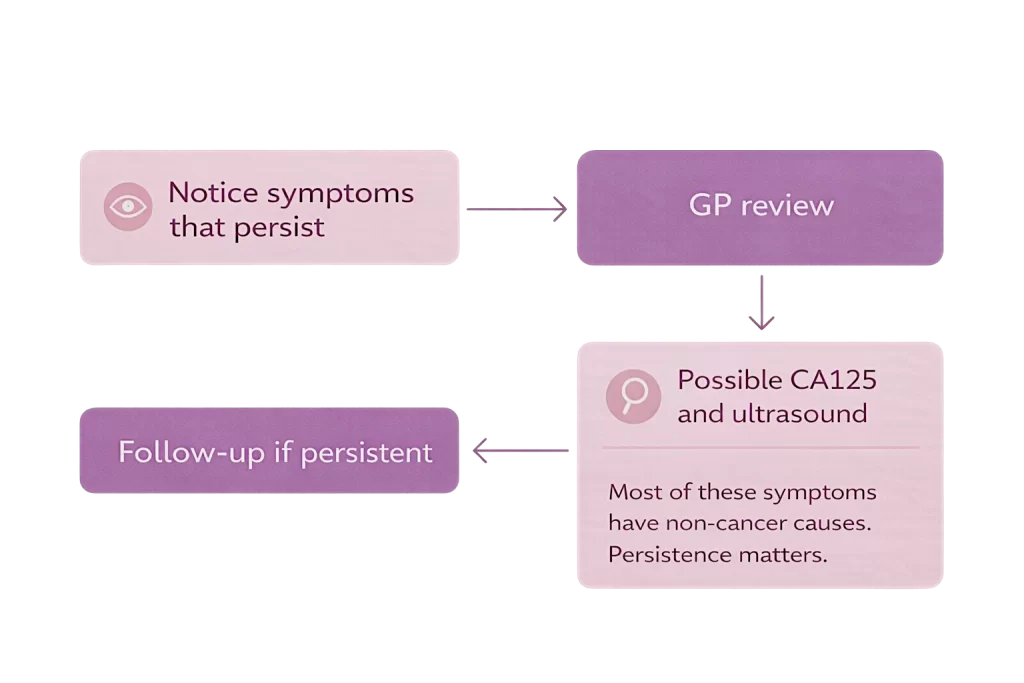
If symptoms persist despite normal initial tests, follow up matters. Ongoing symptoms deserve reassessment, further investigation, or a referral rather than being repeatedly explained away.
Family history and inherited risk
Most ovarian cancers are not inherited. However, some women have a higher risk due to family history and inherited gene variants such as BRCA1, BRCA2, and genes associated with Lynch syndrome.
If you have a strong family history of breast or ovarian cancer, or a first degree relative diagnosed with ovarian cancer at a younger age, ask your GP whether a referral for genetic counselling is appropriate. Genetic testing is not needed for everyone, but it can be important for some families.
For women at high inherited risk, specialist led prevention strategies may be discussed, including risk reducing surgery. These decisions are individual and should always be guided by a specialist team.
A closing thought
Ovarian Cancer Awareness Month is a reminder to notice what is persistent, new, or out of character, and to seek timely clarity when you need it.
Most symptoms will have a benign explanation. Still, you deserve a clear next step and a clinician who takes persistent change seriously.
Sometimes the most grounding thing you can do is name what you have noticed, and ask for a thoughtful review.