

The office air Skin Edit
Why going back to work dries out everything after 40
The back to work problem no one blames on the office
After weeks of summer heat, beach days or just being at home in loose clothes, many women notice the same pattern once they go back to the office:
- Face suddenly feels tight and flaky by mid morning
- Hands look older and rougher than they did in December
- Lips crack, eyes sting, and underarms feel strange – dry in some spots, damp in others
- Synthetic bras, waistbands and work trousers start rubbing again
It is easy to blame age, stress or products. In reality, the building itself is part of the story.
Air conditioning and heating change indoor humidity. When indoor air is too dry, it pulls water from the outer layers of the skin. Studies on indoor environments show that low humidity and air conditioned offices are linked with rough, dry skin, more itch, and flares of eczema in people who are already prone to sensitivity.
For women over 40, who already have a more fragile barrier on the face, body and vulval area, this environmental load can tip skin from comfortable to constantly irritated.
What office air does to skin after 40
Low humidity and the outer barrier
In simple terms, dry indoor air:
- draws water out of the stratum corneum
- reduces elasticity
- increases surface roughness and flaking
- can weaken the hydrolipid film that protects against irritants and allergens
A review on ambient humidity and skin notes that low humidity environments can alter water content in the stratum corneum, change desquamation, and increase roughness.
Commercial and office buildings often run with relative humidity below 40 percent for comfort and mould control. This level is enough for many people to develop dryness symptoms in the skin, eyes, nose and throat. A trial in office workers found higher dryness scores for skin and mucosa in non humidified wings compared with wings kept around 30 to 40 percent humidity.
Why it feels worse in midlife
Around perimenopause and beyond:
- Epidermal turnover slows, and the barrier becomes more vulnerable to mechanical stress.
- Sebum output changes, so some areas are oilier while others become markedly drier.
- Oestrogen loss contributes to reduced collagen, elastic tissue and natural moisturising factors.
Postmenopausal skin is therefore more susceptible to environmental triggers such as low humidity, temperature swings and indoor pollutants, which can aggravate existing conditions such as eczema, rosacea and psoriasis.
The result is a familiar pattern:
- cheeks and hands that sting when you apply products that were fine last year
- lips that crack despite lip balm
- under bust and waistband areas that feel rubbed raw by the end of the day
- underarms that feel sore or chafed even when odour is under control
The problem is not that you are suddenly “fussy”. Your barrier is carrying a higher load in a drier, more controlled indoor climate.
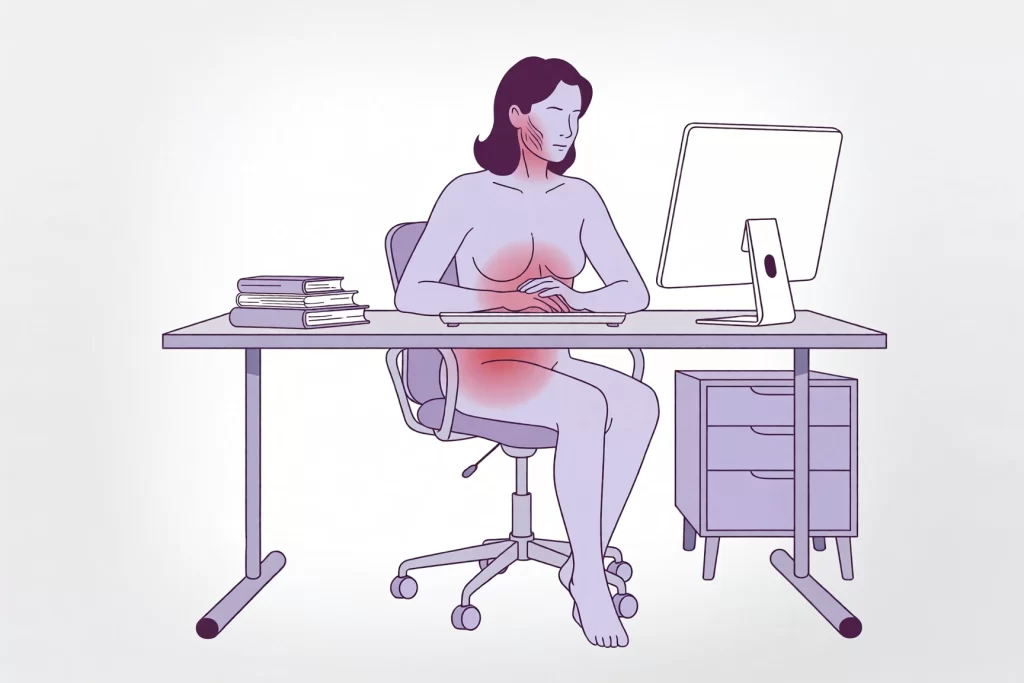
Face, lips and eyes – the upper half of the story
1. Facial skin
Low humidity has been shown to alter transepidermal water loss, reduce elasticity and increase roughness.
What this looks like in the office:
- foundation catching on dry patches by lunchtime
- fine lines around the mouth and eyes appearing more prominent
- cheeks that burn in air conditioning but are fine at home
Supportive strategies:
- switch to a non foaming, low fragrance cleanser in the morning
- apply a moisturiser with humectants such as hyaluronic acid plus barrier lipids such as ceramides and fatty acids
- top up with a light, non comedogenic moisturiser during the day rather than stripping and re cleansing
Commentary pieces on “office air” highlight that moisturisers with ceramides and humectants can help protect the barrier in air conditioned workplaces.
2. Lips and peri oral skin
Lips have a very thin stratum corneum and no sebaceous glands. In dry indoor air and with frequent talking, they lose moisture quickly.
- Avoid constant licking, which worsens dryness.
- Use a simple, fragrance free lip treatment that contains occlusive agents plus humectants rather than only flavouring agents or strong menthol.
- At home, apply a richer layer before bed so you start the workday less depleted.
3. Eyes
Office studies show that low humidity and air flow can destabilise the tear film and increase dry eye complaints, especially in people who use screens for long periods.
If your eyes burn or sting:
- take regular breaks from screens
- blink fully and often
- talk to your optometrist or GP about dry eye management if symptoms persist
Under bust, waistbands and vulval area – the lower half
The lower half of the body often gets less attention, yet it deals with long hours of:
- sitting
- synthetic fabrics
- seams, elastics and waistbands
- panty liners, pads or shapewear in some cases
Dry air and temperature control can still play a role here. Low humidity contributes to a more fragile barrier that is less able to cope with mechanical friction.
4. Under bust and waistline
After 40, breast shape and abdominal fat distribution often change. Folds under the bra band or belly become more pronounced, and the same bra or trousers now apply more pressure to a smaller area of skin.
Practical points:
- choose bras with soft band materials and avoid abrasive lace directly in friction zones
- rotate bras so elastic has time to recover
- consider cotton rich or technical fabrics that wick sweat where possible
- at home, give the area time out of restrictive clothing
A thin layer of a bland, fragrance free emollient in the evening can help support the barrier in these folds, as long as there is no active infection or weeping rash present.
5. Vulval and inner thigh skin
The vulval area and inner thighs can experience a mix of dryness and occlusion:
- drier, more fragile skin due to oestrogen decline and genitourinary syndrome of menopause
- synthetic underwear and pantyhose
- hours of pressure from sitting on firm chairs
Guidance from the Australasian Menopause Society describes how falling oestrogen and androgen levels make vulval skin paler, thinner, and more prone to local trauma.
To reduce friction load:
- choose underwear with a breathable, cotton rich gusset
- avoid fragranced washes, wipes or powders on the vulva
- use only water or a very mild, pH appropriate wash externally if needed
- apply a non hormonal, fragrance free vulval balm or cream externally if you are prone to dryness and chafing, especially on work days
Modern formulations using hyaluronic acid, including microsphere systems, can help attract and hold water in the superficial layers of the skin while a light emollient phase supports the barrier. These are comfort and care products, not treatments for underlying disease, and should be selected with your clinician if you have significant symptoms.
A simple workplace routine that respects your barrier
You do not control the building, but you can adjust your routine.
Morning
- Lukewarm shower, short not scalding hot
- Gentle cleanser for face and body
- Moisturiser with humectants plus lipids, applied within a few minutes of drying
- External vulval care kept minimal and fragrance free
At your desk
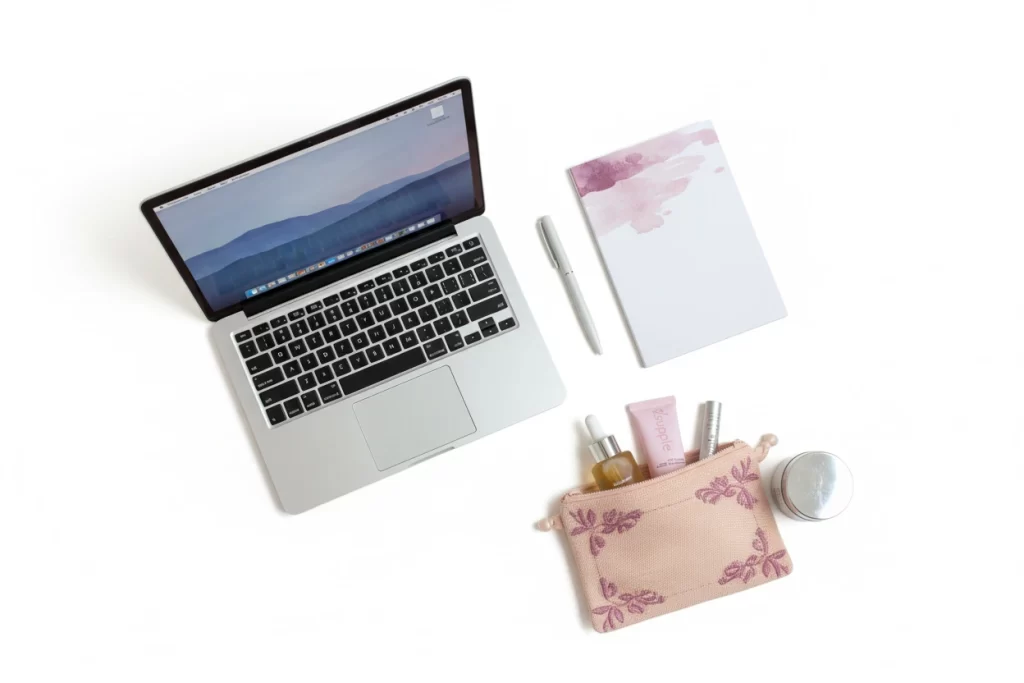
- Keep a small, discreet desk kit:
- fragrance free hand cream
- lip treatment
- if useful, a small amount of non perfumed balm for local friction points such as under bra straps or waistbands (used sparingly and only on intact skin)
- Drink water regularly to support general hydration
- Take brief movement breaks to reduce continuous pressure on the same contact points
Evening
- Rinse off sunscreen, pollution and sweat with gentle cleansing
- Re apply face and body moisturiser
- Check friction zones for early signs of redness or irritation and address them promptly
When to talk to a doctor or dermatologist
Dryness alone is common in air conditioned environments. However, seek medical advice if you notice:
- persistent redness, scaling or cracking that does not improve with simple care
- intense itch that disturbs sleep
- oozing, crusting or signs of infection
- new rashes around eyes, mouth, vulval area or body folds
- worsening of known conditions such as eczema or psoriasis
Specialists can help distinguish between environmental dryness, contact dermatitis, inflammatory skin disease and genitourinary syndrome of menopause and can advise on appropriate medical treatments when needed.
Bringing it together
Office air is not an excuse, but it is a genuine factor. Studies in workplaces link low humidity and controlled indoor climates with dry, itchy skin and mucosa, especially in people who already have sensitive skin.
For women over 40, whose barrier is changing with age and hormonal shifts, that environment can turn ordinary workdays into a slow drain on comfort.
By:
- understanding how humidity and air flow affect your barrier
- making modest changes to textiles and routines
- using well chosen, non hormonal barrier supporting products
- and seeking medical review when symptoms persist
you can turn the office from an invisible skin stressor into a place your body tolerates much more easily.
This is not about having perfect skin. It is about being able to sit, work, move and live in your workplace without feeling that your own environment is wearing your barrier down.