
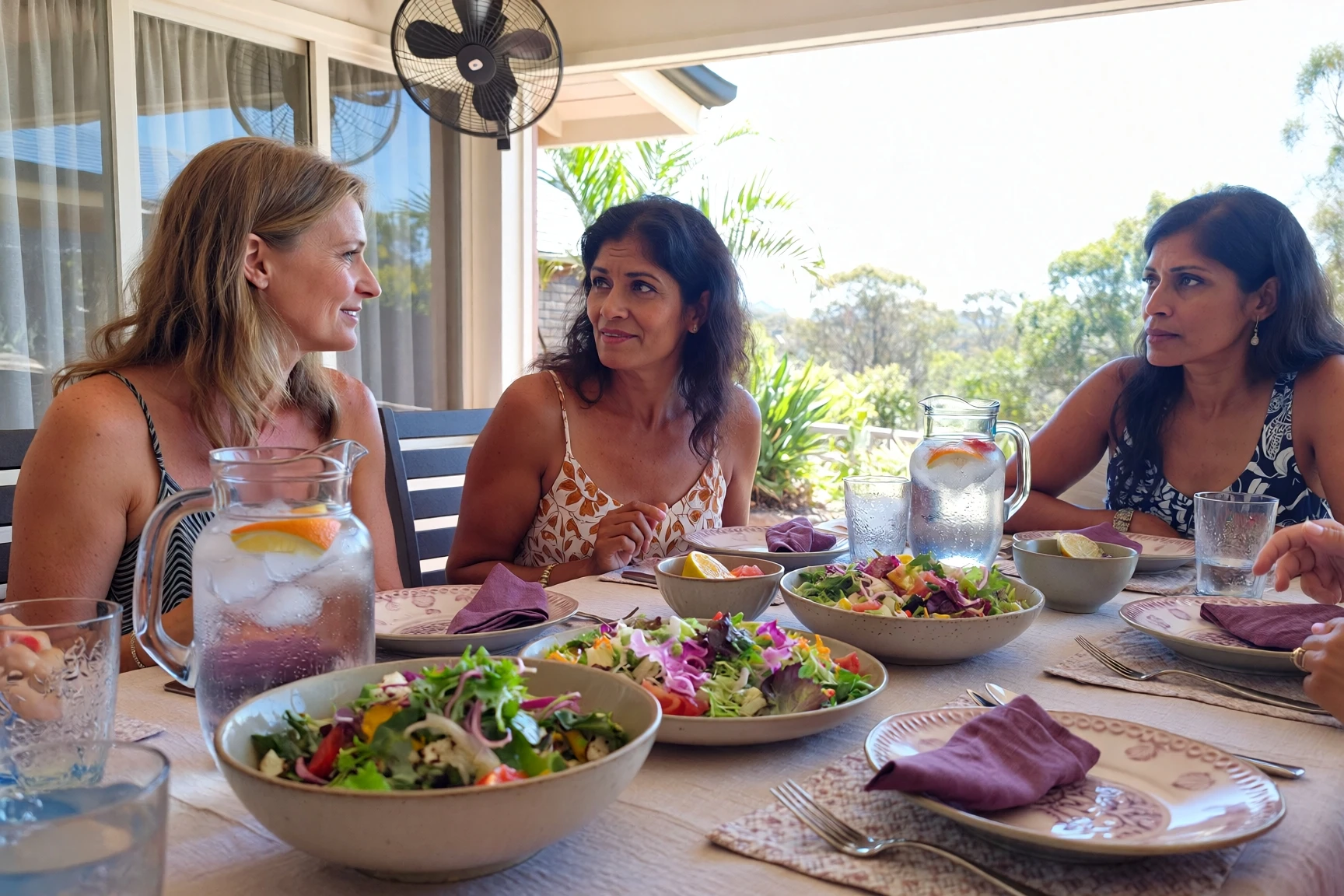
A realistic guide for women 40 plus in an Australian summer
Why Christmas can feel different after 40
Christmas in Australia looks cheerful on the outside. Inside your body it can feel like someone has turned up every dial at once.
Perimenopause and postmenopause already bring hot flushes, sleep disruption, mood swings, vaginal dryness and joint aches. Add summer heat, family expectations and a full social calendar and it is no surprise many women describe Christmas as a perfect storm, not a perfect day. Several menopause charities note that festive stress can make symptoms such as hot flushes, anxiety and sleep disturbance more noticeable.
On top of that, midlife women often carry the invisible job list. Food shopping, present planning, travel, hosting, checking everyone else is happy. By the time Christmas lunch is served, your nervous system and your skin have both done a full marathon.
This Skin Edit is designed for you first. Women 40 plus, peri and postmenopause, in an Australian summer, trying to make the day work for everyone without completely draining yourself.
Heat, hormones and an Australian Christmas
Australia is currently seeing more frequent periods of extreme heat, with temperatures in some regions pushing into the forties over December. Health agencies have warned that older adults and people with medical conditions are more vulnerable in these conditions.
For women in midlife, hot weather can:
- Magnify hot flushes and night sweats
- Increase the risk of dehydration, which can worsen headaches, fatigue and palpitations
- Make irritated or thinning skin more likely to sting, chafe or rash
Simple, science based moves help:
- Hydrate early and often
Drink water regularly, not only when you are thirsty. Healthdirect advises water as the best way to prevent heat related illness.
Keep a jug on the table and a bottle within reach in the kitchen and car. - Dress for heat, not for the photo
Choose light, breathable fabrics, layers you can peel off, and undergarments that do not dig or scratch. If you know synthetic lace or tight waistbands always leave marks, give yourself permission to downgrade the outfit. - Plan cool pockets in the day
Health advice for heatwaves includes using fans or air conditioning and taking breaks in cool spaces.
Before the day, decide where your cool room, shady corner or quiet balcony will be and treat it as non negotiable rest space.

The invisible Christmas job list and your nervous system
A survey from the UK found that around two in five people feel stressed at Christmas, and one in four report anxiety or low mood.
For women in peri and postmenopause that pressure sits on top of an already sensitised nervous system.
Rising and falling oestrogen can influence serotonin, cortisol and other brain chemicals involved in mood, sleep and stress response. It is why the same relative, the same to do list or the same argument can hit harder than it did ten years ago.
On Christmas Day, try framing your decisions through one simple lens:
Does this genuinely matter to the day, or is it a story I am telling myself?
Practical ways to lower the load:
- Cut the list in half
Many menopause specialists suggest reducing festive expectations to make symptoms more manageable.
Pick the two or three things that actually make the day feel like Christmas for you and let the rest be “nice to have”. - Delegate like a scientist, not a martyr
You are running an experiment in not burning out. Give guests specific jobs: salads, drinks, dessert, clean up. Let others feel useful. - Protect one non negotiable ritual for yourself
A quiet coffee before everyone wakes, a walk after lunch, ten minutes with a book. Small anchors help regulate your nervous system.
Skin friction, clothes and intimate comfort
Heat, sweat, long car trips and special occasion outfits are a tough combination if your skin has changed after 40.
Common friction zones:
- Under the breasts and along bra bands
- Under the belly where there is a soft fold
- Inner thighs and groin
- External vulval area and perineum
Thinner, less elastic tissue is more vulnerable to rubbing, maceration and irritation. That can make seams, pads, synthetic underwear or even sitting too long in damp bathers feel harsh.
Evidence based comfort strategies:
- Choose cotton rich or moisture wicking fabrics where possible
- Change out of wet swimwear as soon as you can
- Pat dry, do not scrub, after showering
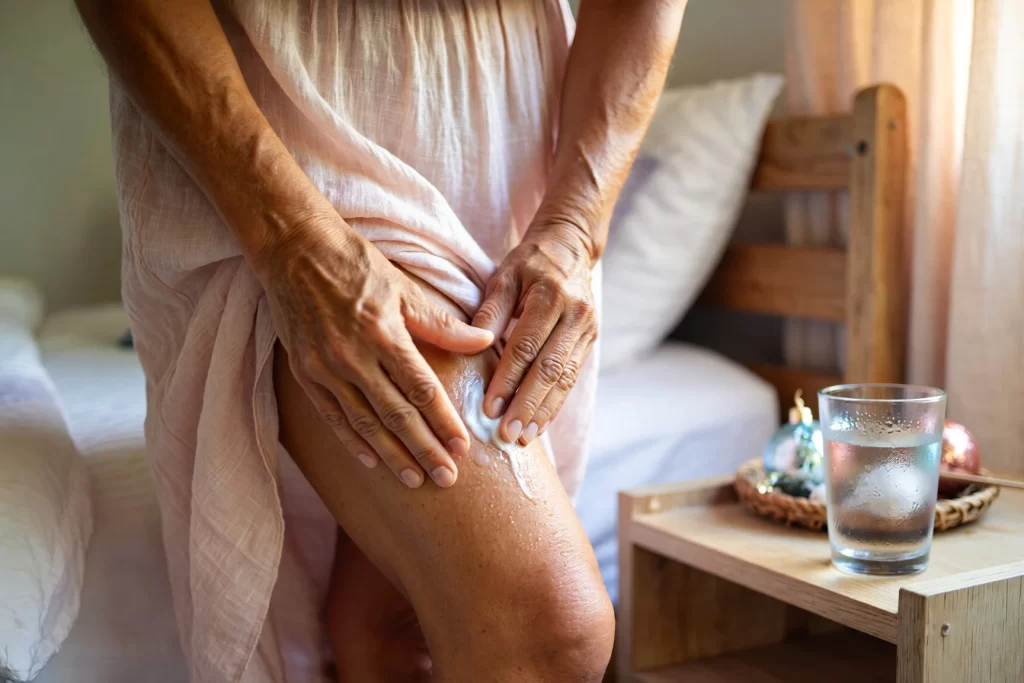
- Use a simple, fragrance free emollient or barrier cream on high friction areas before the day starts
If you already know that your external vulval skin feels fragile or sore, a non hormonal, fragrance free vulval balm that uses microsphere hyaluronic acid and vitamin E can help support hydration and comfort of the outer tissue. Microsphere technology refers to tiny spheres that hold water and release it gradually, helping moisture stay where it is needed at the skin surface. This is supportive care for the external skin only and does not replace medical treatment if you have significant pain, bleeding or suspected infection.
If you notice cracks, discharge, bleeding or symptoms that do not settle, Christmas is not the time to ignore them. Book a review with your GP or specialist once clinics reopen.
Alcohol, sleep and the hot-flush hangover
Australian media estimate that millions of standard drinks are consumed per day across December, and health experts are already warning about the impact on blood pressure, heart rhythm and sleep.
For peri and postmenopause, alcohol complicates Christmas in three ways:
- It can trigger or worsen hot flushes
- It fragments sleep, especially in the early morning hours
- It can intensify low mood or anxiety the next day
You do not have to avoid alcohol completely if you enjoy it and your doctor has not advised against it, but strategic choices help:
- Alternate alcoholic drinks with water or sparkling water
- Eat before drinking so absorption is slower
- Set a personal cut off time so there is a gap between your last drink and sleep
- If you know a particular drink always gives you night sweats, give yourself permission to avoid it
Remember that holiday heart problems, including arrhythmias, are more common around Christmas and New Year, especially when alcohol and stress are high.
If you feel chest pain, severe shortness of breath or new palpitations, seek urgent medical care rather than trying to push through.
If you live with a bloke: a 60 second briefing
Men are part of the Christmas picture too. Many genuinely want to help, they just do not understand what is happening in your body. You can show him this short script.
Christmas is louder and hotter inside my body than it looks from the outside.
The heat, the rushing, the noise and the alcohol can all make my hot flushes, sleep and mood worse.
If I step outside, change clothes, ask you to take over, or say I need ten minutes on the couch, I am not being rude. I am taking care of my nervous system so I can enjoy the day and enjoy you.
Ask him to do three simple things:
- Back you if you say “that is enough for today”
- Take one job completely off your plate without being asked
- Notice when you look overwhelmed and offer a break, not advice
This is not about him rescuing you. It is about him being on your team.
When Christmas is coloured by cancer
For some women, Christmas is also the time they remember a diagnosis, treatment or someone they have lost. If you or a loved one is living with breast cancer or another cancer, the day can feel emotionally and physically complicated.
Organisations like the McGrath Foundation place specialised cancer care nurses into communities across Australia to support people through diagnosis, treatment and beyond.
If this Christmas feels heavy because of cancer, you deserve the same gentleness you would offer a friend. Simplify the day, sit out of activities if you need to, and accept help.
Your Christmas Day is allowed to be smaller and kinder
You are not failing Christmas if:
- The pavlova is store bought
- The table is mismatched
- You only see one branch of the family this year
- You lie down after lunch instead of doing all the dishes
You are in a life stage where your body and brain are doing a complex job. That job deserves respect.
If you take one idea from this Skin Edit, let it be this:
Christmas is not a performance review. It is one day in a long life. Protect your health, your skin and your nervous system first so you can still recognise yourself when the decorations come down