
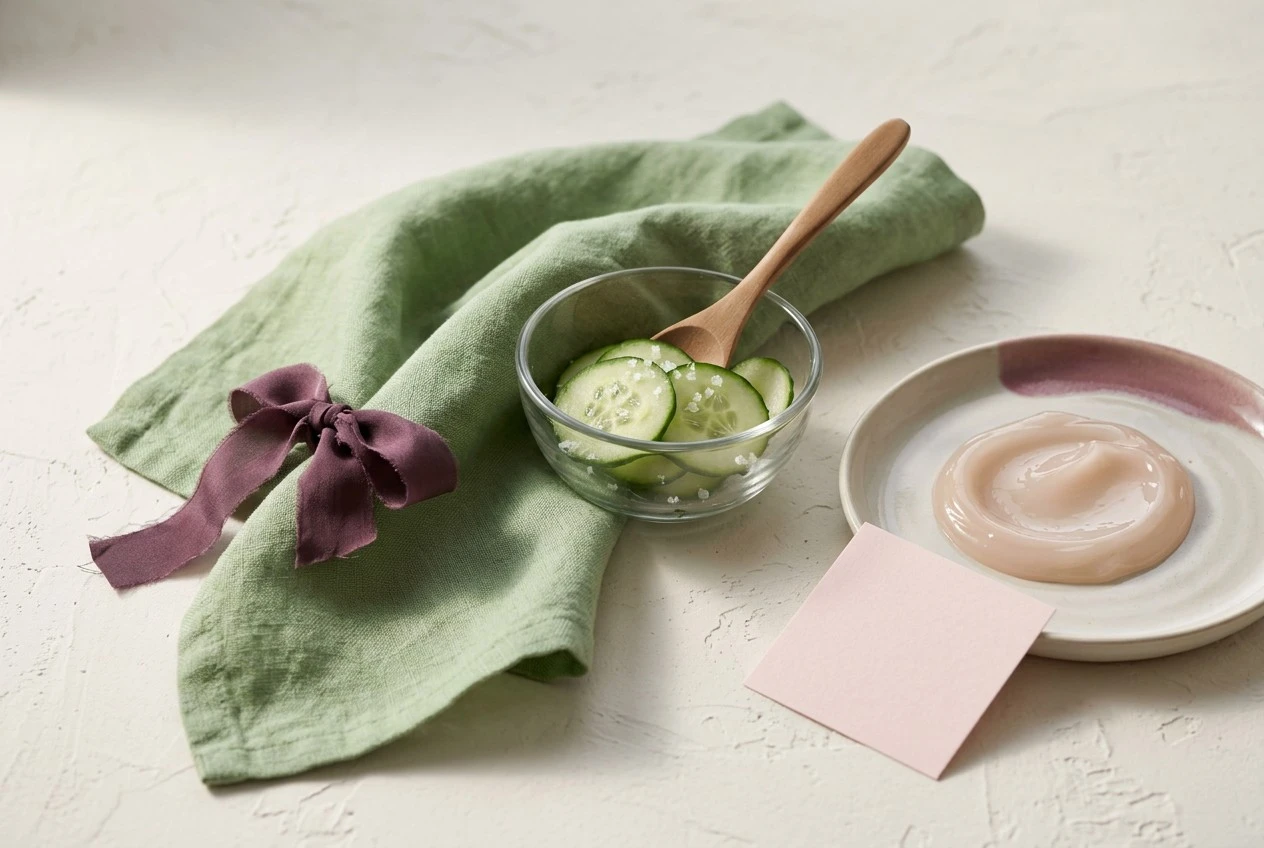
The Fermentation Edit: Green is a process, not a colour
St Patrick Day turns everything green, fast. Drinks, desserts, stories, the lot. But the most interesting green trend in skincare right now is not a colour story. It is a process story.
Ferments are everywhere. Microbiome language is everywhere. And words like probiotic and microbiome are used so loosely that it is hard to know what you are actually buying, or whether you need any of it.
So today we are doing a calm reset with one simple, slightly spicy talking point:
Most probiotic skincare is not truly probiotic, and that is often a good thing.
Because when your skin is reactive, or in a seasonal wobble, stable and gentle usually beats exciting.
Skin forecast
March in Australia is transition season. Daylight shifts, routines shift, and skin often responds like it has been left out of the group chat. For a lot of people that looks like:
- Tightness that was not there a month ago
- A bit more redness after cleansing
- Makeup sitting oddly
- Scent suddenly feeling too much
- Underarm irritation after shaving or heat
If your skin feels inconsistent right now, it is not you being bad at skincare. It is skin doing what skin does when the environment changes.
The talking point
Probiotic vs postbiotic vs ferment in 60 seconds
Probiotics
Live microorganisms. In skincare, that is a tricky claim because live and stable do not always go together.
Postbiotics
Inanimate microorganisms and or their components that can still deliver a benefit. Translation: you do not need live bacteria on your skin for microbiome adjacent benefits to be plausible.
Ferments
A consumer umbrella term. In cosmetics, many fermented ingredients are used as lysates, filtrates, or fermentation byproducts, rather than a jar of live cultures.
The point
If a product is gentle, well-formulated, and works for you, it does not need to be alive to be useful. This matters most if you are sensitive, reactive, or stuck in a cycle of irritation.
Why this is not just a buzzword
Your skin is an ecosystem. It has a barrier, immune signalling, and a community of microbes that co-exist with you. In real life, the part that matters is simple:
Your daily habits shape the environment your skin lives in.
And in a transition season, the environment can get a bit less forgiving. Over-cleansing, over-exfoliation, and heavy fragrance exposure are the common pressure points. Not for everyone, not always, but often enough that they are worth respecting.
A useful way to think about microbiome friendly skincare is not to chase labels. It is to reduce avoidable friction.
- Fewer irritants
- Fewer unnecessary steps
- More consistency
- More barrier support
- Less scent overload
That is the entire strategy.
Ingredient spotlight
Fermented aloe and why fermentation keeps showing up
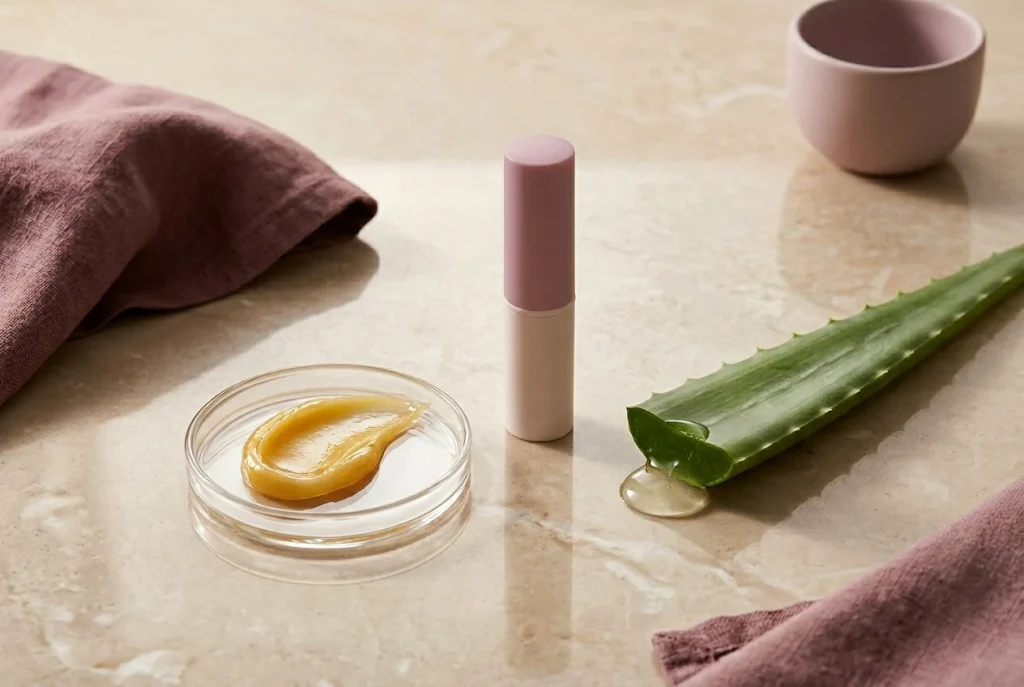
One of the most interesting things about fermentation in skincare is that it can change what an ingredient does. Not because it is magical, but because processing can alter composition, availability, and skin feel.
A simple example is aloe. You already know aloe as soothing. But fermentation can produce a different profile of compounds and a different sensory feel, which is why suppliers keep developing fermented aloe materials.
This is the reason fermentation keeps appearing in ingredient lists. It is not a trend for trend’s sake. It is a manufacturing lever.
And yes, a little behind-the-scenes note from us. We are working on a new V.supple® lip balm that leans into this exact idea, using fermented aloe as part of the formula story. It is one of those ingredients that makes sense for lips because the goal is comfort and barrier support, not drama. More soon.
If you love ingredient chats, here is the comment starter. Do you trust fermentation in food more than fermentation in skincare.
Myth bust box
Myth
If it says probiotic, it must be better.
Reality
Better is how your skin behaves over weeks. Stable and non-irritating often wins, especially in sensitive seasons.
Myth
Microbiome skincare means I need a whole new routine.
Reality
The most microbiome-friendly routine is usually the one that avoids unnecessary irritation, avoids harsh cleansing, and keeps scent and actives sensible.
The Scent Pause routine
This is not a prescription. It is a short experiment for anyone who feels a bit reactive right now.
AM
- Rinse or gentle cleanse
- Moisturiser you already tolerate
- SPF that you can wear daily
PM
- Cleanse once
- One calming layer only
- If you want to trial a ferment or postbiotic style product, make it the only new variable and patch test first
The three zones people forget are skin
If you want to make the microbiome conversation practical, take it off the face for a moment.
Underarms
Underarms are a high-friction zone. Heat, sweat, shaving, fabric, deodorant, and scent all collide here. If you have been battling irritation or odour with stronger and stronger products, a simpler approach can help.
V.supple® Fresh Guard is positioned as a lightweight, water-based deodorising gel designed to neutralise odour without blocking sweat glands, and it is fragrance-free and aluminium-free. Use it as part of the Scent Pause if underarms are feeling touchy.
Body
Body skin is skin. If your face routine is gentle but your body wash is heavily fragranced and your body moisturiser is perfumed, you are still loading the system with potential triggers.
V.supple® Nourish is a lightweight botanical body oil designed for dry and delicate skin with a dry-touch finish. If you are doing a Scent Pause, keep your body steps simple and consistent.
Delicate external skin
If you are managing external sensitivity, the same principle applies: barrier support, fragrance avoidance, and minimal friction. V.supple® Balm is designed for external vulval dryness and discomfort, and is positioned as hormone-free and fragrance-free. If symptoms are persistent, painful, or worsening, check in with a clinician.
Recipe edit
The Green Bowl
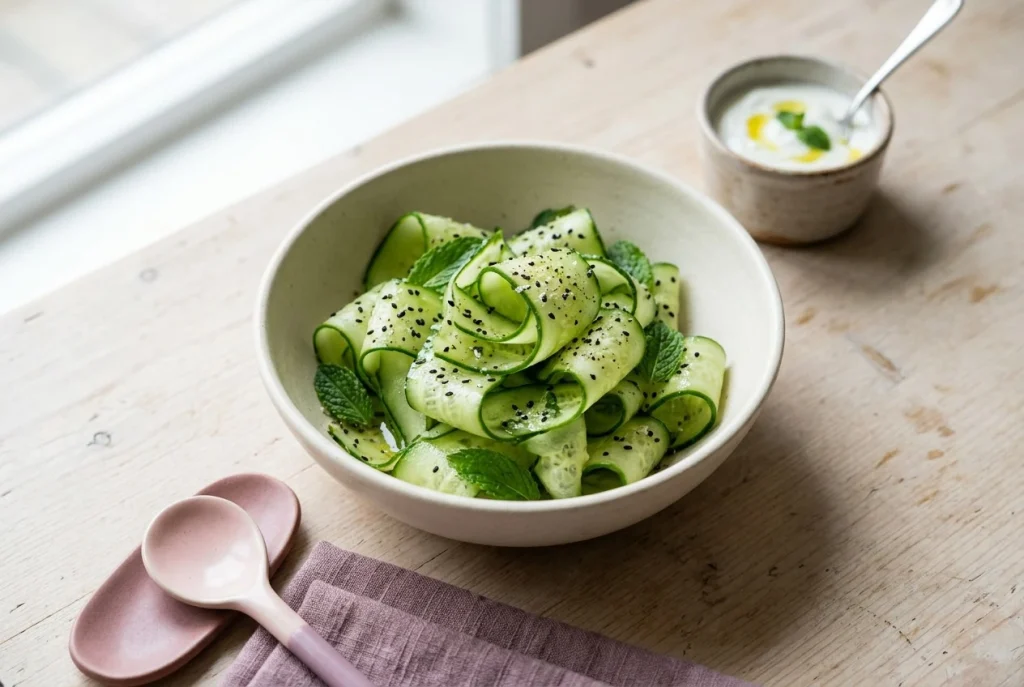
No wellness theatre. Just genuinely good.
You need
- 1 cucumber, sliced thin
- A handful of mint or parsley
- Olive oil
- Lemon juice or a splash of vinegar
- Sea salt, cracked pepper
- Optional: a spoon of plain yoghurt on the side
How
Salt the cucumber lightly, wait 5 minutes, then toss with oil, lemon, herbs, pepper. Eat it with whatever dinner you are already making.
V.supple® Music Lounge
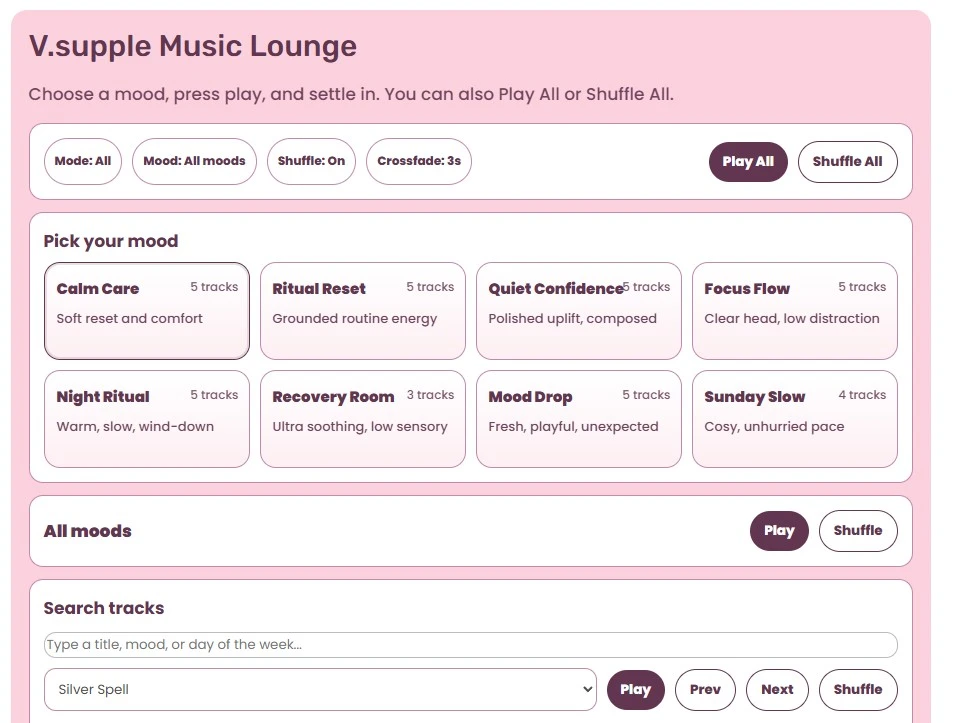
We have a new feature on the site and it is genuinely fun.
The V.supple® Music Lounge is our mood-based playlist hub. You pick the vibe, press play, and let it carry you through your routine. No overthinking, no skipping around, just a curated set that matches how you want to feel.
Today’s pick is Quiet Confidence. Polished, grounded, a little cinematic, and perfect for that steady, capable energy when your skin (and your brain) need calm structure.
Best part, this lounge is always evolving. We will keep adding new tracks, new moods, and new edits as we go.
If you have a style you love, tell us. Drop a request with the kind of music you want more of (genre, era, artist vibe, or a scene like rainy night drive, Sunday reset, post-gym calm) and we will build future mood sets around what you actually listen to.
This Weeks Mood: Quiet Confidence
Ask Dr Tonia
Q: Do I need microbiome skincare if my skin is sensitive
A: You do not need to chase labels. Start with the basics: minimise irritation, avoid over-cleansing, and be cautious with fragrance if you are reactive. The microbiome conversation is useful when it helps you choose gentler habits and fewer triggers. If you are getting persistent burning, rashes, or flares, it is worth speaking with a clinician to rule out dermatitis or allergy.
The 7-day challenge
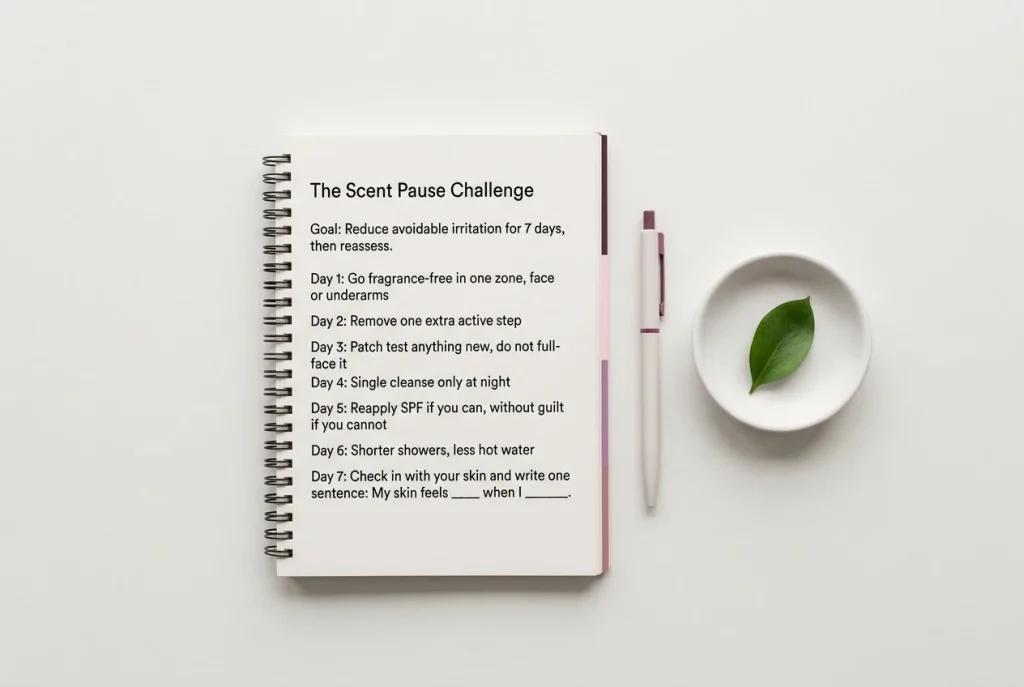
The Scent Pause Challenge
Goal: Reduce avoidable irritation for 7 days, then reassess.
Day 1: Go fragrance-free in one zone, face or underarms
Day 2: Remove one extra active step
Day 3: Patch test anything new, do not full-face it
Day 4: Single cleanse only at night
Day 5: Reapply SPF if you can, without guilt if you cannot
Day 6: Shorter showers, less hot water
Day 7: Check in with your skin and write one sentence: My skin feels ____ when I ____
Closing reflection
If your skin is feeling unpredictable right now, it is not failing. It is adapting. Let green mean steady process, not more products. A calmer routine is still a routine, and sometimes it is exactly what your skin has been asking for.